Tuesday, May 23, 2017

An account of Shoe repairs; apparently for the 8th Virginia Regiment ca. 1776


An interesting account listing shoes, as well as shoe and moccasin ("To Soleing one pair of Mongesons") repairs was recently shared with me (shown above, courtesy Nathan Barlow), Although the unit is not named, the expenses above for "Captain Jonathan Clark"includes the name John Hoy.  Johnathan Hoy appears to have been in Clark's company of the 8th Virginia Regiment and both men's names are mentioned in this 8th Virginia pension application.

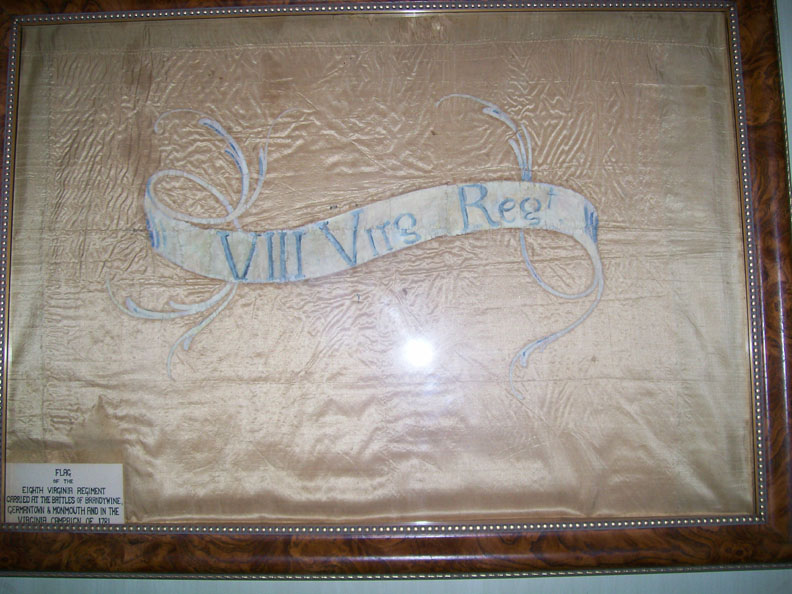
VIII Virg Regt flag discussed here.

The 8th Virginia attribution is further corroborated by a Muster roll for Clark's company of the 8th in the same year that lists Clark, John Hoy (Sgt Mjr), and appears to also confirm George Walker (#10), Joshua Williams (#4),Walter Wumer (#55) and possibly some others from the shoe account above.


This info has been added to an older blog on Moccasins and shoe packs

Monday, March 13, 2017

1777 Dunmore County Volunteers equipment appraisals


In the fall of 1777, volunteer companies from several Virginia counties formed and elected their officers in preparation for a relief mission to Fort Pitt.  An appraisal of personal arms and equipment from Captain Thomas Buck's Dunmore (later renamed Shenandoah) county company survives, ostensibly to aid in repayment should those arms be lost or damaged while on the campaign.


Thomas Buck's headstone

 Although not a complete account for the entire 44 man company (the remainder may have been using public arms, although Buck's own pension application  states that there were "no public stores to resort to"), several interesting things jump out, such as the ratio of rifles (6) to smooth bores (8) and the extreme high cost of rifled arms in comparison to the smooth bores (£11-8 vs £2.5).  For the most part the listings are typical for militia "accouteraments" and contain guns, shot bags and horns, although a few men have a "belt" appraised as well, the belts are only listed with tomahawks. Sadly the knives are not specifically described. Many of the men also bring blankets, although Jacob Stover has "one quilted blanket" appraised at 10 shillings.  


An original smooth bore gun, knife, shot pouch, powder horn and blanket similar to what the men in Captain Buck's company would have used (Private collection). 

 This is to Certify that we the subscribers have apprised Sundrie Articles as hereafter mentioned the same being the property of Capt Thomas Buck the Officers & souldiers under his Command being one of the Volenteer Companies from Dunmore County against the Indians September 17th 1777. Viz. William Huver one Rifle } gun & accouteraments 235/. }... ^11.15 one blanket for ditto 25/. ...... 1.  5 John Huver one Rifle gun }. ..... 11. ditto            ditto  220/ } one blanket 20/ . ....... 1. George Millar one blanket } shot pouch, power Horn, }. ..... 1.10 tomehawk & belt 30/ } Martin Millar one blanket } Powder Horn, shot pouch tome- }. . 1.16 hawk knife & belt 36/ } John Middleton one blanket, } shot pouch, powder horn, tome- }. . 3. hawk, knife, & belt. 60/ } John Crookshank (first Leutenant) one Rifle Gun  Mold & wayper 200/.. ^10. one smooth bore, shot pouch, } and powder horn 140/ }. .... 7. one Large blanket 40/ . ..... 2. 19. Carried over      ^50.  6 [signed in German] Lorrantz Gapp[?]/ [signed] Alex’r Machir Amount brought forward ^50.6 Jacob Yost (second Leutenant) } one Rifle Gun shot pouch } powder horn, ¾ Ld powder, tome- } hawk, knife, & belt 250/ }. ^12.10 one blanket 18/ ..... .18 13.  8 Capt. Thos. Buck one Rifell } Gun, shot pouch & Horn 230/ }. .... 11.10 one blanket 45/ . .................. 2.  5 13.15 one smooth bore Gun 50/. ........... 2.10 George Whitsels Gun one Rifell ditto ditto 160/. ........... 8. Martin Rollers Gun one blanket, shot pouch, } & powder horn 50/ }........... 2.10 Lionel Bransons afores’d one smooth bore Gun 45/. ........... 2.  5 Jacob Stovers Gun one quilted blanket 10/ ............. .10 Martin Rollers Blankt one blanket ditto 10/ ............. .10 Jery Evan’s Blanket one smooth bore Gun 65/. ..........  3.  5 my own Gun                     ^96.19 Given from under our hands the date as above we being duly sworn apprisers for the same, the total amount is Ninty Six pound Nineteen shillings. [signed] Lorrent Gapp/ Alex’r Machir

Wednesday, July 6, 2016

George Washington buys mail order Assault weapons in 1774 without a background check


As tensions mounted between the citizens of Virginia and Royal Governor Dunmore, the Governor dissolved the House of Burgesses which in turn allowed the standing Militia law authorization to lapse.  In the wake of this, several volunteer "Independent companies" of extralegal uniformed militia were formed in various Virginia Counties.  As one of Virginia's most experienced military leaders,  Colonel George Washington led the Fairfax Independent company  and was involved in procuring military style arms and accouterments for that and other Independent companies including that of Prince William County.  In correspondence to Washington dated December 27, 1774 William Grayson requested that Washington
"... write to Philada. for forty muskets with bayonets, Cartouch boxes, or Pouches, and slings, to be made in such a manner, as you shall think proper to direct..."
In a previous letter to Washington dated November 29, 1774, William Milnor writes:
"...I have Applyed to two Gunsmiths, One palmer tells me he Can make one hundred by May next, And Nicholson says he can make the like Number by March, they both agree in the priece at £3.15. this Currcy.4 Palmer says Mr Cadvalder had agreed With him for 100 at that price, a Jersy Musquet was brought to palmer for a patern, Mr Shreive Hatter of Allexandira has one of that sort, which you may see..."
The "Jersey Musquet" was most likely a New Jersey purchased Commercial Wilson musket of the type imported during the French and Indian War.


A Wilson commercial musket


A light musket with striking similarities to the Wilson muskets survives, signed by Thomas Palmer in the collections of the Museum of the American Revolution.  


Pennsylvania Gazette Ad for Palmer ca. 1773

This Palmer marked musket has a convex side plate and distinctive "Wilson" style trigger guard, but differs from the Wilson pattern by mounting a flat commercial lock, and is cut for a bayonet.

Some of Washington's military equipment (Mount Vernon link)

Tuesday, January 19, 2016

18th Century Dog names


I enjoy Eighteenth-century  hunting treatises, and as a dog lover I was very excited when I stumbled across
"A Catalogue of some general Names of HOUNDS and BEAGLES." from The Gentlemen's Recreation (1721 edition).  If anyone is ever in need of a name for a new pooch, inspiration can surely be found here.


Long standing favorites Lady and Rover are in the mix, as are a few less familiar names such as Sweetlips,  and Mopsie that George Washington utilized. 


The Lightfoot dog buttons at Colonial Williamsburg give us an insight into some other hound names used in Virginia in the period:

"Loiterer, Noisey, Ringwood, Rainger, Juno, Tinkerer, Tanner, Caesar, Blossom, Rover,  Piper... and two Trumpiters..."


At the very least you will likely be the only one calling  for Bluecap, Jolly boy, Spanker, or Soundwel at the dog park.

Wednesday, October 14, 2015

New Book review: transcription of the Virginia Public Store 1775-76


I am excited to review of a transcription of the Journal of the Public Store at Williamsburg 1775-1776 by Greg Sandor.  This self published transcription contains a wealth of nuts and bolts material culture information for Virginia's army from the first year of the Revolution in Virginia, which is a welcome addition to the exciting but not complete extracts put together in the 1960s by Goodwin for Colonial Williamsburg. Sandor's work includes the 180 page transcription, as well as a handy index of people, goods, places, and individual military units.  In between the expected thousands of yards of osnabrigs, kettles and canteens are a few surprises like tea pots for the hospital, dowlas rifle patches, stamped linen and rose blankets.  The transcription is easy to read, professionally bound and well done.  My only suggestion would be that I'd love to see the actual original page image beside the translation as was done in this excellent store letter book transcription.   This work will answer many questions for anyone trying to track down the who, what and where (or ahem, pardon the pun, wear) for early War Virginia units.

Copies can be ordered here.

or here
 
It is also for sale at the Greenhow Store in Colonial Williamsburg and at Fort Pitt.

Wednesday, June 3, 2015

Choosing a RevWar militia gun


Choosing a gun for a Revolutionary War militia impression.


One of the more costly (and thus difficult) choices to make when equipping for a Revolutionary war militia (or early war Continental soldier) impression is firearm choice.  Like many modern conflicts, the early battles of the Revolutionary war were frequently fought with the leftovers from the last war; the French and Indian or Seven Years war.  

The Companies that served upon the Ohio last year having been disbanded by Act of Assembly Upon their return into this Province and a Gratuity of £5 having been allowed to all such as should return into the province and as the most part of them upon their return through Virginia dispersed and carried off their Arms, and a very small number returned to receive that Gratuity-” Arthur Dobbs to the Speaker and the Gentlemen of the Assembly 17 May 1759 (Colonial Records of North Carolina)

In choosing a plausible firelock for this impression, it is a good idea to nail down what actually existed and was common in the area being represented.  Sadly, great lists like this one from Hyde County NC are rare items (those types are further illustrated here), but it does a great job of showing the diversity in arms that some militia companies fielded. 


The MACARONI SPORTSMAN. by M. Darly 1772 (Lewis Walpole Library).


Fowling Pieces:

 
Likely the most common civilian arm of the era, there are contexts where English import fowling pieces are an acceptable choice for a militia impression. The new fowling gun kits from Jim Kibler appear to be a great option for that route. in some areas, regional restock styles (New England, Hudson valley) are also a solid choice. Four foot barrels and walnut stocks appear to have been the most popular.


Muskets:


Luckily, three main front runners have been identified for "common" muskets from the prior conflict that were imported for provincial use and were very widespread in the colonies.  This list is in no way all inclusive, many other varieties can be documented in almost every colony (for instance, small amounts of captured Spanish muskets in Massachusetts and Pennsylvania, as well as local restocks and etc), but these three main options offer "safe" choices via documented usage in large numbers in the colonies below (the majority of them are found through primary documents but some via excavated parts).


Muskets of the King's pattern:

Long land pattern musket from Colonial Williamsburg's emuseum.


Pattern 1742 muskets with wooden rammers were the workhorses of the French and Indian War, half of all imported muskets from the Tower were of this type (well over 10,000 stands).  In addition, some earlier guns (Pattern 1730s in Georgia and Queen Anne era muskets in multiple colonies) can be documented in some places. The best reproduction option that is currently available is from the Rifle Shoppe or parts from Track of the Wolf, although some have had decent success reworking Pedersoli short land muskets towards the general look of a pattern 42- a conversion I believe was pioneered by the late Kit Ravenshear. However, the barrel will be 4 inches too short.  As an aside, before buying or building anything I recommend you do yourself a favor and compare any reproduction muskets with the illustrations in Goldstein and Mowbray's The Brown Bess; An Identification Guide and Illustrated Study of Britain's Most Famous Musket.


Dutch Muskets: 


Dutch Muskets were the second most commonly imported guns from Ordnance stores during the F&I era for use here.  The best reproduction option that is currently available is from the Rifle Shoppe (Dutch type II series 693 without barrel bands and wooden rammer).


Wilson commercial military style muskets:


Wilson commercial military style muskets saw wide spread use in various configurations, generally following the lines of King's Pattern guns with lighter and cheaper furniture. The best reproduction option that is currently available for these is from the Rifle Shoppe (Series 671), although some have had success reworking Pedersoli short land muskets (furniture swap, remarking), they will be about 4 inches too short in the barrel for most of the earlier applications (a surviving New York  Wilson musket has been shortened to 42 inches and there are surviving military style fusees and muskets that appear to have been that length from the start). 


Thursday, December 11, 2014

Bearded People: Dunkards in the New River Valley

One of the more interesting groups of 18th century settlers in back country South West Virginia were the Dunkards, a protestant non conformist religious sect with some peculiar traits as described in 1750 by Dr. Thomas Walker

"6th March. We kept up the Staunton (7) to William Englishes. (8) He lives on a small Branch, and was not much hurt by the Fresh. He has a mill, which is the furtherest back except one lately built by the Sect of People who call themselves of the Brotherhood of Euphrates, and are commonly called the Duncards, who are the upper Inhabitants of the New River, which is about 400 yards wide at this place. They live on the west side, and we were obliged to swim our horses over.(9)The Duncards are an odd set of people, who make it a matter of Religion not to Shave their Beards, ly on beds, or eat flesh, though at present,in the last, they transgress, being constrained to it, they say, by the want of a sufficiency of Grain and Roots, they have not long been seated here. I doubt the plenty and deliciousness of the Venison and Turkeys has contributed not a little to this. The unmarried have no Property but live on a common Stock. They don't baptize either Young or Old, they keep their Sabbath on Saturday, and hold that all men shall be happy hereafter, but first must pass through punishment according to their Sins. They are very hospitable. "


Portrait of the the eccentric Quaker Benjamin Lay of Pennsylvania

(Smithsonian National Portrait Gallery).  For further reading on him, the Fearless Benjamin Lay.


another primary account from a Moravian account read:

"Oct 31. ....Towards evening we met an old man whom Br. [Brother] Nathanael engaged in conversation, and as we passed near hes fence we asked him to sell us some turnips, but he was so good as to make us a present of a nice quantity, and gave an invitation that any of our people passing this way should visit him. He had heard perhaps a hundred lies about the Brethren, - that we were "bearded people," that we enjoined celibacy, etc. - and now learning the truth the old man rejoiced, and took a friendly leave of us. ..." (
Travels in the American Colonies, Diary of a Journey of Moravians from Bethlehem, Pennyslvania, to Bethabara in Wachovia, North Carolina, 1753)

A brief but interesting paper on them and their settlement at "Dunkard's Bottom" (portions of that land was eventually purchased by William Christian and is now under Claytor Lake ) that was commissioned by Appalachian Power titled Dunkards Bottom: Memories on the Virginia Landscape 1745 - 1940 can be found here.

  20th century image showing the ruins of the Dunkard cabin chimneys and foundations with the 19th century Cloyd house at far left and the 1770s home of William Christian at right. From Roger E.Sappington's  The Brethren in Virginia: The History of the Church of the Brethern in Virginia. (The Committee for Brethren History in Virginia, Harrisonburg, VA. 1973).