Monday, February 1, 2021

"A List of the Negroes at the Lead Mines" The enslaved workforce of Virginia's Revolutionary War lead mine.

Our American liberty was won in part, using leaden bullets mined by men and women who were themselves denied freedom. One of the regrettable ironies of our fight for Independence from Britain is that approximately 33 enslaved men and women labored at Chiswell's lead mines in southwest Virginia (located in modern Austinville Virginia, near Wytheville) during the Revolutionary war. The mines had been a private commercial concern, but by 1776, were rented and administered by the State of Virginia due to their strategic importance. In a letter to William Byrd, who was one of the mine's partners; Edmund Pendleton wrote that "the Committee of Safety wishes to have the Assistance of your two negroe men Big Joe and Little Isaac or if you cannot spare them, two others named Lewis and Sligo" (Pendleton papers v1 p149 EP to WB 2/9/1776).

The labor of these slaves was generally voluntarily "hired" by their masters for a term of eight years; however in one case a runaway named Bristol who had been caught attempting to join "Lord Dunmore's fleet when at Gwynn's island" was sent to the mines as a prisoner. Bristol's lost wages were petitioned for by his former owner, William Mountague of Lancaster County, Virginia in 1779. Bristol again attempted to gain his freedom in 1785 and a runaway ad for him was published in the Virginia Gazette.


Virginia Gazette or American Advertiser (Hayes), Richmond, May 14, 1785.

TWENTY POUNDS REWARD WILL be given, for apprehending and delivering to me, two negro men, CAESAR and BRISTOL, alias BRISTER, or Ten Pounds for each of them. Caesar is about 5 feet 7 inches high, of a square athletic make, and supposed to be near 30 years of age; he had on, a blue regimental coat, faced with white, and I believe, a white cloth waistcoat and breeches. He was purchased by the State, of William Robinson, Esq; of Princess Anne, the agent of John Hancock, and has for some years past been employed at the lead mine. BRISTOL, or BRISTER, is about 5 feet 9 inches high; of a spare make, and about the age of CAESAR. He was formerly the property of Mr. William Mountague of Lancaster, and has been employed for some years at the lead mine. He wore at the time he ran away, an old brown cloth coat, and an old pair of leather breeches. He carried with him, a new blue coat faced with white or red, a new white cloth waistcoat and breeches, and a new blanket.
THOMAS MERIWETHER. Richmond, May 10, 1785.


A conjectural sketch of the issued clothing worn by enslaved mine workers circa 1780. Illustration by Jim Mullins.


The names of the enslaved workforce were recorded in a manuscript now held in the Library of Virginia and are included below in hopes that they will be properly remembered for their contribution to our Nation as an integral part of the forging of our Republic, even while being denied freedom and the fruits of their labor themselves.


A List of the Negroes at the Lead Mines

Will
Bob
Cesar
Ned
David
Fielding
Juba
Bristol
Lewis
Roger
Jacob
Frank
Peter
Tar
Aberdeen
Tom
James
Phebe
Sue

These are able & fit for Labor when well }

Aberdeen
Glasgow
York
George
Lucy
Phillis
Sarah

Old & Super annuated

Charles
Luke [i]
Luke [ii]
James
Kitt
Aaron
George
Sam [i]
Sam [ii]
Jacob
Peter
Dick Run away


Clothing and bedding was issued to the enslaved workers from the Virginia Public Store (excerpts from Colonial Williamsburg MS)

Virginia Public Store Daybook June 1, 1778-Nov. 13, 1778 M-1016.1
Williamsburg 6th Nov. 1778
Lead Mines per Order Governor Dr
To Sundry Clothing for 33 Negroes imployed in that work del Colo. Charles Lunch Viz
To 264 Yds Tartaine
231 do Linen
33 pr Stockings
allowing [illeg] shirts [per] man...

M106.2
Nov.1 1779
Lead Mines Ord Board of Trade
Sundr furnished Negroe Dick belonging to the Mines Vizt.
1 Coat
1 pr Breeches
1 Waistcoat
1 Shirt
3 1/2 Yd Linen 1pr Stockings
1 Cap 1 pr Shoes
1 Baize Blanket

M-1016.2
Daybook Williamsburg Public Store
July 1, 1779-July 12,1780
[Nov. 3 1779]
"...Publick Lead Mines and B. of Trade
Sundr. for Clothing the Negroes at the Mines: Viz.
195 Yds 5/8 Coarse Cloth @ 25/... 243..15-
32 1/2 do. Green baize @ 10/... 16..5-
35 Pair Stockings @ 15/ 26...5-
30 hunting shirts @ 12/6 18..15..-
4 Baize blankets @ 90/ 18..
8 Small dutch do. @ 9L... 72..-...-
23 better do.
2lb Sewing thread
8 doz Pewter butts
30 ditto vest
Pr Christopher Irvine


Richmond 28th November 1780 p138
M-1169.5 Richmond
Public Lead Mines pr Ord Governor
For Sundry Clothing furnished for the use of Thirty Three Negroes belonging to the Public [illeg] works at the Mines-Vizt
10 Sailor's Jackets
45 Yds coarse Cloth for 15 uper Jackets
33 Sailors under Jackets
33 pr Breeches
261 Yds Osnabrigs for 66 Shirts & Linings
for 20 pr Breeches
7 yds Negroe Cloth
40 yds do do
Pr Harry Terrece [?]

Unlike Bristol, who was carried to the mines as a prisoner after attempting to join the British forces with Lord Dunmore at Gwynne's Island; an enslaved man named Aberdeen left his master (a Loyalist named John Goodridge, possibly the infamous privateer John Goodrich ) when Goodridge sought to join the British at Norfolk in 1776. Aberdeen presented himself to one James Hopper and was subsequently sent by Colonel Lynch to the mines where he "labored Honestly" until 1783, at which time he successfully petitioned for his freedom (thanks to both April Danner and Sarah Nucci for bringing Aberdeen's story to light). In addition to Aberdeen, the slaves who had served in the army were then legally emancipated.

CHAP. III. [Chapter CXC in original.] An act directing the emancipation of certain slaves who have served as soldiers in this state, and for the emancipation of the slave Aberdeen.

Chan. Rev. p. 210. I. WHEREAS it hath been represented to the present general assembly, that during the course of the war, many persons in this state had caused their slaves to enlist in certain regiments or corps raised within the same, having tendered such slaves to the officers appointed to recruit forces within the state, as substitutes for free persons, whose lot or duty it was to serve in such regiments or corps, at the same time representing to such recruiting officers that the slaves so enlisted by their direction or concurrence were freemen; and it appearing further to this assembly, that on expiration of the term of enlistment of such slaves that the former owners have attempted again to force them to return to a state of servitude, contrary to the principles of justice, and to their own solemn promise. Preamble reciting that many slaves, during the war, were enlisted into the army, as substitutes, being tendered as free men. II. And whereas it appears just and reasonable that all persons enlisted as afosesaid, who have faithfully served agreeable to the terms of their enlistment, and have thereby of course contributed towards the establishment of American liberty and independence, should enjoy the blessings of freedom as a reward for their toils and labours; Be it therefore enacted, That each and every slave, who by the appointment and direction of his owner, hath enlisted in any regiment or corps raised within this state, either on continental or state establishment, and hath been received as a substitute All slaves so enlisted, by appointment of their masters, and serving their term, emancipated.


Colonel Charles Lynch, who managed the lead mine during the Revolution, became an advocate of manumission in his later years. A 1792 document signed by Lynch read:

“All men who are by nature free and agreeable to the command of our Lord and Savior Christ believe it is our duty to do unto all men as we would have them do unto us.”


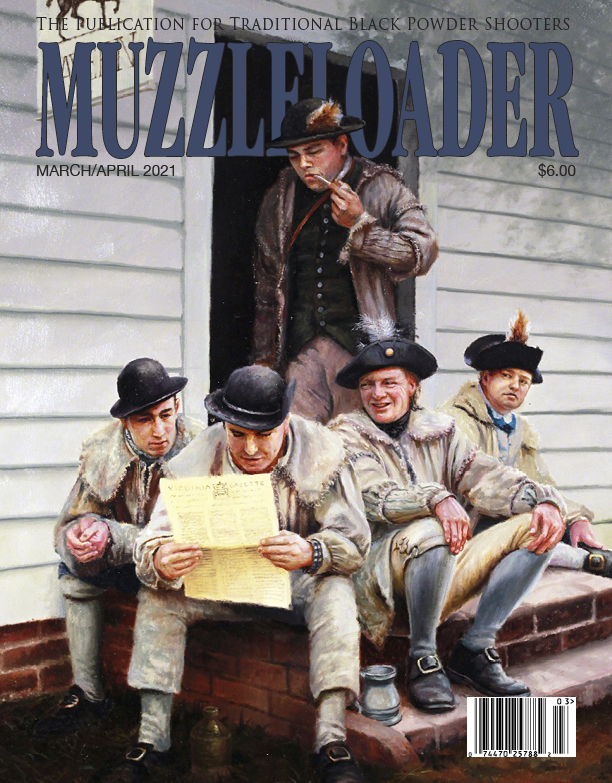
For further information on the lead mines, I encourage you to have a look at my article "Chiswell's Lead Mines" which appears in the March/April 2021 issue of Muzzleloader magazine.

My sincere thanks to April Danner, Sarah Nucci, Michael Gillman, Spenser D. Slough and Joel Anderson for their generosity in sharing primary source information on this often overlooked topic. Additional info can be found here:

Wednesday, January 27, 2021

Setting a Genteel table: William Preston's Imported Ceramics in the Virginia Backcountry

One of the most prominent figures in the history of the 18th-century Virginia backcountry was William Preston. During his lifetime, Preston wore many hats, serving as a Surveyor, a Soldier in two wars (both as a County Militia Officer as well as a Ranging company officer during the French and Indian War) and as a Politician: fulfilling several roles in Virginia's Colonial Government. Preston became one of the most wealthy men in the region, amassing large amounts of land and experimenting in numerous revenue streams including land speculation, farming, the slave trade and running a distillery. Preston lived at "Greenfield", in Botetourt county during the 1760s and around 1773 began building a new home named "Smithfield", in what would become Blacksburg in Montgomery County, Virginia near the site of Draper's Meadow. The APVA's Historic Structures Report for the house can be found here.
Smithfield is an (unusual for the area) 18th century timber frame building that would look more at home in Virginia's Tidewater region than in the Virginia backcountry, and as such was a powerful demonstration of his wealth and status when compared with the more common small log structures of his neighbors.

A 19th century copy of an 18th century drawing depicting Colonial era military Officers and Gentry carousing while an exhausted enslaved Servant stands by the wall in Charleston, South Carolina. " Mr. Peter Manigault and his friends drawn by one of them (Mr Roupell) about the year 1754 from which this copy is now made in August 1854 by his Great- Grand - Son Louis Manigault Charleston So.Ca." Gibbes Museum of Art Gift of Mr. Joseph E. Jenkins 1968.005.0001

Recent excavations at his Greenfield property uncovered portions of a mid 18th-century Earthenware "clouded" or "Tortoiseshell" glazed plate as well as other artifacts including an English trade gun buttplate. Preston's choice of ceramics for his table at Greenfield mirrored that many of his middling neighbors who utilized sturdy utilitarian pewter and stoneware tablewares; the lower sort perhaps treen.

"Tortoise Shell Cups and Saucers" Advertised alongside a variety of ready made slop clothing and common goods in the North Carolina Gazette (October, 1759, page 4)

A mid 18th century molded "clouded" plate similar to fragments excavated at Greenfield in 2016-2018 (Private collection).

The mottled and molded clouded or tortoiseshell glazed plates from Greenfield were evidently replaced by the more fashionable "Creamware" style of molded earthenware in the upwardly mobile Preston family household by 1771. Preston was a very early adopter of this style in Virginia.

A ca. 1770-80 Creamware plate (Private collection).

Ann Smart Martin's Buying Into the World of Goods: Early Consumers in Backcountry Virginia mentions that: "The earliest reference to Queen's ware- also known as cream-colored ware- in Virginia dates from 1768; by the summer of 1771, a wealthy Tidewater planter had reported that Queen's ware had attained popularity among his peers. That [William] Preston also purchased "Queen's ware" on his 1771 trip [from Botetourt to Williamsburg] simultaneously illustrates his awareness of fashion and the absence of large sets in his own local market."

The earliest mention of "Queen's sets of cream coloured ware..." from the Virginia Gazette also references the universality of stone wares in the past and the novelty of the new cream wares. Virginia Gazette, Purdie and Dixon June 30, 1768 page 2.

Although he was one of the first to procure it in the backcountry; Preston wasn't the only man in Southwest Virginia who would own creamware. McCorkle's store in what is now Pulaski County, Virginia carried "Queen's china" around the eve of the Revolution, and scattered references are found in local estates and probate inventories, such as a 1773 court case involving the debts of a deceased blacksmith in Fincastle county and the 1776 will of Welsh immigrant and Chiswell's lead mine manager William Herbert.

Oval creamware platter from Fort Chiswell. Detail figure 48 from Excavations at Fort Chiswell (Funk/Hoffman/Holup/Revwer/Smith UVA Laboratory of Archaeology 1976).


At Fort Chiswell, "Creamware was one of the more common ware types found at the site and was included in every structure...But an earlier mottled glazed cream-colored ware (refined earthenware) known as "clouded" ware was produced in 1740. We have just one sherd of this type, located in Structure #2 in a sealed eighteenth century level..." (Excavations at Fort Chiswell p61).

Creamware became immensely popular and despite being fairly new in the remote Virginia backcountry in 1774 English Potter Josiah Wedgewood foreshadowed that "I apprehend our customers will not much longer be content with Queen's Ware it being now render'd vulgar and common everywhere". Wedgewood's prediction would eventually prove truthful, and feather edge creamware fragments were recovered at Fort Boonesborough, among numerous other Revolutionary War era frontier sites.

Friday, October 30, 2020

A Timeline of the Virginia Cherokee Expedition 1760-1761

 A Timeline of the Virginia Cherokee Expedition 1760-1761


Hostilities broke out between the once allied Cherokees and British Colonies in 1759. Friction between the two parties (encouraged by French diplomacy) spiraled into sporadic back country violence and escalated into an outright war following the killing of Lt. Richard Coytmore and the retaliatory execution of Cherokee hostages being held at Fort Prince George in early 1760.  The garrisons at Fort Prince George, 96, and Fort Loudon (Tennessee) were subsequently under attack; the latter cut off. British authorities responded to requests of military assistance from South Carolina by sending approximately 1,400 British regulars (composed of the 1st Royal Regiment and the 77th) under the command of Colonel Archibald Montgomery of the 1st Highland Battalion (77th) from New York in March of 1760. 


Left: Private of the 1st Royal Regiment from the 1742 Cloathing book (NY Public Library).  

Right: Grenadier of the Royal Regiment ca. 1751 by David Morier (Royal Collection Trust).

Bottom: Brass hilted infantry hanger matching the style depicted by Morier above (Private collection).

 Montgomery's regulars saw initial success against the Cherokee lower towns but received a serious check at the battle of Etchoe in June as he advanced on the Cherokee middle towns. Montgomery and his second in command Major Grant (of Grant's defeat infamy) withdrew and returned to New York by August, failing to rescue the garrison at Fort Loudon.


Detail from  Copley's ca. 1780 portrait of Hugh Montgomerie, 12th Earl of Eglinton (National Galleries, Scotland)
 

While the regulars were ordered to attack the lower Cherokee towns from South Carolina, Amherst ordered the under-strength, neglected, and scattered Virginia Provincial Regiment under Col. William Byrd "to hold the regiment in readiness to march." from garrison duty in the Virginia and Pennsylvania back country (March 30, 1760 Correspondence of the Three William Byrds of Westover Virginia 1684-1776 Volume 2).


 Col. William Byrd III (link)

Colonel Byrd's family had been involved in the Southern Indian trade since the 17th century and he had served as an envoy to the Cherokees and Catawbas in the Carolinas for the Colony of Virginia in 1755 and 1756. After the resignation of Colonel Washington, he took command of the Virginia Provincial Regiment in 1759 (he commanded the short lived 2nd Battalion for the 1758 Forbes campaign against Fort Duquesne). Upon being ordered to march to the relief of the besieged Fort Loudon Garrison, Byrd wrote Brigadier General Monkton on May 24th, 1760  that "...You will judge of the impossibility of the attempt when I tell you that this fort [Loudon] is six hundred miles beyond our outermost inhabitants & not a post in the whole way; no men are yet levy'd for that purpose, neither are any provisions or carriages engaged. These men [of the Fort Loudon garrison] must unavoidably fall into the hands of the savages who will shew them no mercy." (Correspondence of the Three William Byrds of Westover Virginia 1684-1776 Volume 2). Despite his protests and attempt to resign from the expedition, Byrd did his best to muster a relief party. The experienced Byrd recommended a plan to advance in stages along the lines of the "Protected Advance" utilized by Forbes in the campaign prior. Byrd's ill equipped forces slowly moved southward, many of them without regimental clothing and unarmed. By the time his under-strength regiment was fully armed in late August (with the assistance of Colonel Chiswell), the Garrison at Fort Loudon had already surrendered to the Cherokee and many of the men had been massacred. Byrd continued his route towards the Big Island (Kingsport Tennessee), and advanced parties encountered survivors of the garrison and a party of Cherokees under Attakullakulla (Little Carpenter) who had ransomed Captain Stewart and removed him to the safety of the Virginian's lines. 


 Site plan showing the various building footprints from Sayer's plantation, which would later become known as Fort Chiswell and later McGavock's Tavern or Ordinary. The last structure on the site before road construction is the 20th century Davis house at center. Interim Report Archaeological Excavations at Fort Chiswell, Wythe county Va. 1976 David K. Hazzard and Martha W. McCartney.

 Sayer's Plantation/Fort Chiswell

 View showing the approximate location of the original Sayers era buildings from the general area of the magazine (from left to right: Sayer's log House, log kitchen and smokehouse).

 Sayer's Plantation/Fort Chiswell

Byrd encamped at the abandoned plantation of a Virginia officer named Alexander Sayers, who is mentioned in passing in Timberlake's Memoirs  (Lt. Timberlake recounts him concerning a dangerous crossing of the rain swollen Youghiogheny River; Sayers later drowned crossing the New River in 1765) and had already removed his family from the area for greater safety in New London while he was with the army at Fort Ligonier in Pennsylvania. When Byrd's command reached the "Camp at Sayer's" on Reed's creek (near modern Wytheville, Va), they encountered a small farm consisting of a log house, a log kitchen and a small four foot square smokehouse (the bricks used in the foundation were excavated in the 1970s). 

 
Firearms related artifacts from the Fort Chiswell site dig, including parts from a "Brown Bess" type musket. Interim Report Archaeological Excavations at Fort Chiswell, Wythe county Va. 1976 David K. Hazzard and Martha W. McCartney.

At some point from 1760-62, the Virginia Provincials added a dug out powder "magazine" similar to the one unearthed at Fort Ligonier in Pennsylvania. Contradicting local lore, this magazine was the only purely military architectural feature discovered by Archaeologists working a salvage dig at the site prior to highway construction. Although incongruous with the modern use of the word "fort", it should be remembered that this site was first considered a way point  on the protected advance towards the site of the yet un-built Big Island fort. 

 
Reconstructed Powder magazine at Fort Ligonier

The next year Byrd was ordered to proceed to Stalnacker's plantation  "to erect a small log-house fort for the security of provisions, ammunition & etc." so it appears likely that the Virginia Provincials simply made use of the existing structures at the camp, and the log house was sufficient to earn the name "Fort Chiswell" (named for Col. John Chiswell, a business associate of Byrd's, who was partners with Byrd and Chiswell's son in law, John Robinson in a nearby mine that would later become an important source of lead for Virginia during the Revolutionary War) with the addition of an underground powder magazine to secure their stores. Later Revolutionary war accounts of proper blockhouses at Chiswell's nearby lead mines in Austinville, Virginia likely added to the confusion about a proper fortification at the Sayer's site. The 1976 Hazzard/McCartney dig report notes that a February 1761 letter from William Fleming to John Bullitt is the earliest reference to "Fort Chiswell" but the same letter also refers to the site as "their camp."


Brass Dutch musket sideplate fragment found near Fort Chiswell; courtesy, GM “Doc” Watson.
 

Brass Dutch musket sideplate. Private Collection.

Negotiations with the Cherokees began and an agreement to cease hostilities until the following March were agreed to with the condition that the Virginia army did not press further towards the Cherokee towns. Provincials overwintered at the Sayer's/Ft. Chiswell site, and the campaign against the Cherokee upper towns began anew the next spring. The loss of crops, the lack of ammunition and casualties from the campaign began to take a heavy toll on the Cherokee who were heavily dependent on the now disrupted deerskin trade with South Carolina.


Virginia Provincial Officer Lt. Henry Timberlake's map of the Overhill Cherokee towns

 In South Carolina, Montgomery had been replaced by James Grant, who proceeded against the middle towns with an enlarged force of around 1400 regulars and about 500 South Carolina provincials; again engaging them near the Etcho pass in June and burning fifteen middle towns. Grant's victory drove many of the remaining warriors to the upper towns, which the significantly smaller Virginia Provincial force was supposed to assault from the North.

 
Militia soldier by George Townshend, 4th Viscount and 1st Marquess Townshend
pen and ink, 1751-1758NPG 4855(63) © National Portrait Gallery, London

Virginia troops again massed at Fort Chiswell, and then on to Stalnaker's plantation on the Holston river. By July 1761,  Byrd reported that "My whole force is only six hundred and seventy men fit for duty. Those I have employ'd since I came here in building a block-house, & throwing up an intrenchment round it, for the security of themselves & provision." This fort at Stalnaker's was named after Attakullakulla and was near the modern town of Chillhowie Virginia, about 58 miles from the Great Island. Twenty years later visitor described this fortification as "a kind of a wretched stockade." (A tour in the United States of America: containing an account of ..., Volume 1 By John Ferdinand Smyth Stuart).


Detail from the 1755 Mitchell Map showing the site of Stalnaker's cabin, the furthest western English settlement in Virginia, which was erected in 1750 with the help of Dr. Thomas Walker.

By October the long awaited (and mostly unarmed) North Carolina provincials and a party of Tuscaroras arrive at Fort Chiswell. Around this time the Virginia Provincials had reached and fortified a position at the Great Island (Kingsport, Tennessee) and have constructed a proper 120 foot log fort with four bastions, named Fort Robinson. By November a peace treaty was concluded.

Below is a rough timeline of events taken from:

Amherst Papers, 1756-1763: The Southern Sector : Dispatches from South Carolina, Virginia, and His Majesty's Superintendent of Indian Affairs
Edith Mays, Ed. Heritage Books, 1999 

Correspondence of the Three William Byrds of Westover Virginia 1684-1776 Volume 2

The Official Papers of Francis Fauqier, Lieutenant Governor of Virginai 1758-1768, Vol. 1

 1760

Feb 1, 1760 Cherokees kill settlers at Long Cane Massacre in SC

February 16, 1760, a Cherokee war-party attacked Fort Prince George to free the hostages.
The British executed all hostages and repulsed the assault after  Lt. Richard Coytmore was killed in an ambush while coming out to parlay with the Cherokees.

Feb/March Fort 96 attacked in SC

March 20 Fort Loudon garrison in Tenn attacked by Cherokees

May 29 Byrd asked to be excused from Cherokee expedition

June 23rd Byrd called down from Fort Bedford, PA to command (in a Sept 16th letter to Abercromby) says was mortified to be told to command “this ill-concerted expedition”


July 4, Byrd at Augusta CH/Staunton says everything deficient but provisions

July 7 Fort Loudon (TN) garrison runs out of corn

July 9 (in a Sept 16th letter to Abercromby) Byrd says levies/recruits complete but not armed or clothed.

July 11 Byrd tells Gov and Council in a letter that he is at Bryan's and will need posts every 25 miles to the Big Island and a big fort should be built at Big Island. Asks what the
Ft Loudon (TN) relief plan is, should the garrison hold out until he arrives, is he to reinforce or withdraw/abandon it.

July 18 Byrd at Camp on Roanoke to Monkton "2/3rds of the mob I command (I cannot call them nothing else) are new rais'd men, who at this moment are neither cloathed or armed..."
mentions Montgomery hit lower towns and only has 30 days provisions must want to raid Loudon and abandon if so.

August 8 Fort Loudon surrenders

August 25th Byrd's "musketts came up" (in a sept 16th letter to Abercromby) so his troops are now all armed

August 27th Byrd marches towards Big Island

Sept 3 Byrd crosses the New River, meets 4 starving men who escaped Ft Loudon on August 1 (in a Sept 16th letter to Abercromby)

Sept 9 Maj. Andrew Lewis advanced party above Big Island encounters Little Carpenter with Cpt. Stewart, friendly Cherokees and small party of British survivors from Fort Loudon

Sept 16th Byrd letter to Abercromby mentions above letter from Lewis

Sept 17th Byrd proposes articles of peace delivered via Little Carpenter to Chota, demanding return of Ft Loudon and prisoners, offenders who attacked fort
pushes for Little Carpenter to be head man, asks Governor if this suits (copy sent by Amherst April 61)

Sept 19th letter to Gov and Council at Sayer's (Ft Chiswell) the Sunday before Maj Lewis brought in Little Carpenter and Ft Loudon survivors

Sept 24th Byrd asks Gov and Council if the regiment is to be completed (1000 men) and what is to be done over the winter

Nov 3 letter to Gov and Council from Byrd at Sayer's saying Little Carpenter returned on Saturday with 32 more Cherokees and gave up 10 more prisoners from Ft Loudon, promise to end hostilities
until March when they will meet on his terms if Virginians advance no further on the expedition towards Cherokee towns. Byrd is waiting on Indian presents for them, Byrd will station troops in order to protect frontier

Nov 22 Byrd at Bryan's has discharged and paid new levies, is about to go to Winchester, wants to go to NY for business that winter

Dec 3, Byrd is at Winchester will be in Williamsburg for next assembly session, "is sorry he has given so little satisfaction in his command, and therefor resigns his commission."

1761

April 28, 1761 LT Gov Fauquier  orders Byrd to proceed to Stalnacker's  "to erect a small log-house fort for the security of provisions, ammunition & etc. and from thence to advance
 with as many picked men to the Big Island...there wait for from Major General Amherst...conduct the intended expedition into the Cherokee upper towns.


June 6: 145 men at Fort Chiswell based on Byrd's return, bulk of forces in Staunton


June 30 1761 651 men at Fort Chiswell under Byrd

July 1, 1761 Byrd at Camp at Fort Chiswell (letter to Amherst) "this our most advanced post"

July 7 Robert Stewart writes George Washington from "Camp before Fort Chiswell" that they arrived last week at "this our most advanc'd post" Major Lewis and 3 companies advanced from camp to open road to the Holston, other companies to follow and no sign of NC Troops

July 9 1761 Byrd is at Fort Chiswell writing to Moncton saying he doesn't have enough men

July 16 2 Runners from Little Carpenter arrive at Stalnakers (Stewart to GW 20 july 1761)

July 17th Little carpenter arrives at Stalnakers with 42 other Cherokees 1/4 mile off of advanced sentries to talk to Byrd. (Stewart to GW 20 july 1761)

July 19 Byrd arrives at Stalnaker's Plantation

July 20 1761 Robert Stewart writes that a post is to be built at his location at Stalnaker's plantation, still no NC troops, over 100 men sick with fevers

July 31 45 men left at Chiswell 24 sick

August 1 Byrd's letter to Amherst says he arrived at Stalnakers on July 19th, doesn't have enough men to do 200 miles, Grant did little with more and retired
says "My whole force is only six hundred and seventy men fit for duty. Those I have employ'd since I came here in buildign a block-house,
& throwing up an intrenchment round it, for the security of themselves & provision..." says 200 miles more road to build, Cherokees are coming in suing for peace,
he resigns, appoints Stephen.


August 26th NC provincials have reached Salisbury, NC on the way up with 374 Men & 52 Indians, "that he had not above 50 Stands of Arms for the Whole"

Sept 7 1761 Adam Stephen is at Ft Chiswell in command

Sept 12 troops under Adam Stephen finish fort at Stalnakers (Stephen to Amherst oct 5) he marches to the Holston, gets letter from "obstinate" Cherokee

October 8, 1761 AS reports NC Troops under Waddell reached Fort Chiswell
    3. Adam Stephen wrote Governor Fauquier on 8 Oct. that Hugh Waddell (c.1734–1773), colonel of the North Carolina forces, had arrived at Fort Chiswell with about three hundred men and a number of Tuscarora Indians (Exec. Journals of the Virginia Council, 6:199).

October 9 1761 90 men at Fort Chiswell, bulk of troops at Great Island

October 24th AS @ Great Island: "I have erected a square redoubt of hewed logs on a piece of very strong ground on the banks of the river, with four bastions, the exterior 120 feet. I have done this from the just sense
I have of the great advantage of it will be to have a post maintained here, either by the King or Colony. It is the only advanced betwen Pittsburg & Ft. Prince George, commands
a large river navigable to the Missippi & not only awes the Cherokees, but several other numerous tribes of Indians.

Nov 19 treaty agreement with Cherokees

Nov 28 1761 Adam Stephen return of troops at great Island
    744 Virginia Regiment 408 North Carolina [including 52 Tuscarora Indians] 1152 total

    Timberlake agrees to go to Cherokee towns as hostage

December 20 1761 4 Barrels of Powder, 200 weight of barr lead and 150 quires of cartridge paper are at Ft Chiswell with 17,899 lbs of flour, 300lbs beef and 8 bags of salt


December 25 1761 Northern allied Indians skirmish with Cherokees Col. Stephen to Col. Henry Bouquet (Fort Chiswell, Jan. 7, 1762)

Stephen, Adam in: B. M., Add. MSS.,
21648, f. 1, A. L. S., and in Stevens,
et all., The Papers of Col. Henry
Bouquet, Series 21648,
part I, pp. 1-2.

p. 1.

(page 1)

About Seventy Northern Indians, Set Some Cherokees a Scampering on Christmas day last; but let one fellow slip through their fingers after they had taken him.
 They behaved themselves extreamly well to our People, but conducted themselves, very indifferently as Warriors, they had Opportunity to give the Cherokees a Severe Blow.
 They very readily produced there pass on all Occasions, Signed At Pittsburg Ocr 27. George Croghan.

1762
March Timberlake at Fort Attakullakulla
April Timberlake at Wmsburg with Cherokee delegation
May Timberlake takes Cherokees to London

1763 March Timberlake returns to Va

1764 fall Timberlake takes Cherokees to London
1765 September Timberlake dies


--------------------------------------------------------------------------------------------

Byrd papers V2 note p727

Bryan's to Dunkard Bottom [Pulaski Virginia] 40 miles
thence to Sayer's Mill (aka Reedy Creek aka Ft Chiswell aka Modern Wytheville) 24
Thence to Davis' 26
thence to Stahlnaker's 25 [Marion Va/Chillhowie Fort Attakullakulla]
thence to the halfway spring 25
thence to the Big Island 25 [Kingsport TN Fort Robinson/Chiswell's son in law, financial scandal fort abandoned in 62 later fortified as fort Patrick Henry in 76]

[total] 165
From the Big Island to Chotee 130

[grand total ] 295 miles


Thursday, October 22, 2020

Virtual event: Understanding the Firearms of April 19,1775 10/28/2020 6pm EST


Cummings Davis Society Event: Muskets of the American Revolution

October 28, 2020 6:00 PM — 7:00 PM


Learn all about the muskets of the Concord Museum’s collection that were fired on the North Bridge on April 19, 1775 streamed from the Lisa H. Foote History Learning Center. Experts Joel Bohy, of Bruneau & Co., and the Concord Museum’s Curator, David Wood, explore the objects that played a part in the events of the fateful day. In this unique setting, participants will experience historic objects like they never have before.

This program is an event of the Cummings Davis Society, which helps support acquisitions and preservation of the Museum’s distinguished collection for future generations. All are welcome!

Please note that this program is virtual.  Participants will be emailed a link to watch the program live on Wednesday, October 28.


Register HERE

Monday, June 8, 2020

"Those who cannot remember the past are condemned to repeat it."


"Those who cannot remember the past are condemned to repeat it."– George Santayana


The War Horse, Tessa Pullen, 1997 Richmond Virginia.

Historical events are immutable; however our understanding of them, their context, implications and the motivations of the participants can change over time and through scrutiny. Destroying historical artifacts, manuscripts, and books does a great disservice to future generations and all of mankind. 

Erasing the evidence of injustice obliterates the opportunity to learn from it in the future.

America is certainly not perfect. Perfection is, in my opinion, non-existent where humanity is involved; but America IS exceptional and it is imperative that future generations have the opportunity to learn from American history, including the good, bad and indifferent. 


Graffiti being removed from the Robert Gould Shaw & 54th Massachusetts Regiment Memorial, Boston Massachusetts.

In the same vein, art does not necessarily have to be pleasing or comfortable to the viewer, and it is a horribly selfish act to destroy art to suit one's own agenda, whether it be photographs by Mapplethorpe or a 19th century bronze statue in Richmond's Monroe park.

If your "peaceful protests against fascism" involve vandalizing property, burning books, destroying art, and historic artifacts, I hate to break it to you but you have become what you say you are against. Instead of inflicting your Kulturkampf on others through violence, why not choose to be a positive addition to your community?

Updated June 14, 2020

"Once is happenstance. Twice is coincidence. The third time it's enemy action." Ian Fleming


The defaced statue of abolitionist Mathias Baldwin, Philadelphia.


Tomb Of The Unknown Soldier Of The American Revolution 


At this point, it is a great idea to look at historical patterns, and to realize that it appears that the well meaning protests have been co-opted by an attempted Cultural Revolution

 "Ever get the feeling you've been cheated?"


THESE are the times that try men's souls. The summer soldier and the sunshine patriot will, in this crisis, shrink from the service of their country; but he that stands by it now, deserves the love and thanks of man and woman. Tyranny, like hell, is not easily conquered; yet we have this consolation with us, that the harder the conflict, the more glorious the triumph. What we obtain too cheap, we esteem too lightly: it is dearness only that gives every thing its value. Heaven knows how to put a proper price upon its goods; and it would be strange indeed if so celestial an article as FREEDOM should not be highly rated...  [The American Crisis, by Tomas Paine, 1776]

Updated June 24, 2020

Woke "protestors" have now destroyed two "offensive" statues in Wisconsin.  I suppose they may have been too patriotic for the mob.


Decapitated statue of Hans Christian Heg, a Norwegian immigrant, anti slavery politician, and Union Infantry officer who died of his wounds at the Battle of Chickamauga.

"Forward" statue, by Jean Pond Miner, a 1996 bronze copy of the 1893 copper original. 

Jean Pond Miner Wikipedia link: During the World's Columbian Exposition in 1893 Miner, along with Helen Farnsworth Mears, was named an artist-in-residence in the Wisconsin Building and at that time produced Forward, a state that was "a symbol of the suffrage movement". The work was cast in bronze by the "women of Wisconsin..."

Jean Pond Miner working on "Forward", 1893


Tuesday, May 19, 2020

Revolutionary war Virginia cartridge boxes

Cartouche Boxes

In the opening stages of the American Revolution, many Virginians in Militia companies, or the new Continental regiments were armed with older "Cartouch" or Cartridge boxes (frequently called "belly" boxes in modern parlance) that belted around the waist, and/or shot bags and horns. Many arms shipments from England in the past had included these cartouch boxes with bayonets as part of a complete "stand of arms." Around 1,200 cartouch boxes were inventoried in the Williamsburg Powder Magazine in 1775 and helped supply the fledgling Virginia Continental Regiments (Journals of the House of Burgesses of Virginia 1773-1776, Volume 13, Pages 223-4.) These boxes were light and economical. A thin leather flap was nailed over a painted wooden box. Belt loops were nailed to the front of the wooden block. As defined in The Gentleman's Compleat Military Dictionary (1759):

CARTRIDGE-BOX  is a Case of Wood, or turn'd Iron covered with Leather , holding a dozen Musquet Cartridges; it is wore upon a Belt, and hangs a little higher than the right Pocket-Hole.

[Cartridge] POUCH; a Grenadier's Pouch, is a square Case or Bag of Leather, with a Flap over it, hanging in a Strap of about two Inches broad, over the left Shoulder...

Although the British generally differentiate the two by using the terms box [belly] or pouch [shoulder] , American soldiers were not always as unambiguous, such as James Johnston, who testified that " my Cartridge box was never of [off] my neck"


British issue "Belly" Cartouch box from historical image bank


In 1776, multiple contracts and payments went out through the State for Cartouch/Cartooch boxes as detailed by Mary Goodwin (CLOTHING AND ACCOUTREMENTS OF THEOFFICERS AND SOLDIERS OF THE VIRGINIA FORCES 1775-1780. From the RECORDS of the PUBLIC STORE at WILLIAMSBURG)

" The Committee of Safety for Virginia (which committee had charge of such things for the state until the new government was formed in June, 1776) contracted for supplies for the army. On February 19, 1776, the committee contracted with Mr. Anthony Noble, of Berkeley, to "furnish 1,000 cartouch boxes, Belts and bayonet cases at the price of 9s. each "[Calendar of Virginia State Papers, Vol. VIII, pages 90...]"

 Noble was also involved in manufacturing arms with his partner Adam Stephen.

Wartime shortages caused Adjutant General and soon to be Quartermaster General, Timothy Pickering to suggest to Governor Jefferson that Virginia substitute waist boxes of the "belly" type instead of shoulder pouches in 1780.
To Thomas Jefferson from Timothy Pickering, 3 July 1780
War-Office July 3d. 1780

"Sir
We did ourselves the honour of writing to your Excellency on the 20th ulto. when we expected to be able to send you 2000 cartridge boxes: but we have been disappointed; and Major Peirce has received at present but between six and seven hundred: nor, are we certain how soon the rest can be furnished. But as the whole number will be incompetent to the demands of your state, we beg leave to suggest to your Excellency the expediency of getting a quantity made in Virginia; and as the time is pressing, a slighter kind may be provided. The British have for several years past furnished their new levies with cartridge boxes made of close wood (as maple or beech) with no other covering than a good leathern flap nailed at the back near the upper edge, and of sufficient breadth to cover the top and whole front of the box: they are fixed to the body by a waist belt which passes thro’ two straps that are nailed to the front of the box. Cartouch boxes of this kind will answer very well, and may be made at small expence and with great dispatch."


Soft Pouches

Shoulder slung pouches seemed to have been preferred, and they offered quite a bit more protection than the waist belt boxes that had only a single leather flap . A variety of forms, materials and capacities are noted in the early portion of the Revolution in other states (some holding 17 rounds, others 23 and etc.) but many featured a bag with a leather flap and shoulder straps nailed to the back of the wooden block from the exterior.

"On March 300 1776, the Committee contracted with Messrs. Faulk and Burkhard to furnish "for the use of the army fifteen hundred cartooch Boxes with proper Belts at the price of 8s. 6d each; 1000 Bayonet Belts with double Frogs at the price of four shillings each; 2000 priming wires and brushes at 5a. p'r Dozen, and 500 pair of shoes at the,price 7s.6d. p'r pair, to be delivered at the Town of Fredericksburg within six weeks from this day, and approved of by the Commissioners of the Gun Manufactory there "[Calendar of Virginia State Papers, Vol. VIII, pages 145, quoted in Goodwin]"  

The Faulk/Foulk and Burkhard were apparently Pennsylvania merchants. The inclusion of bayonet belts/double frogs in the Faulk transaction may imply that these were shoulder worn soft pouches. Faulk/Foulk was also linked in payments for "sundries for the public use" with a merchant named Young, possibly the same Young peddling the "New Invented Napsack & Haversack in one" who was also selling "Best cartouch boxes, for 23 rounds, with a pouch, large flap, and Shoulder Belt - @8/6 Bayonet Belts, to go over ye Shoulder with a double frog to Carry a Bayonett & Tomahawk @4/6."


Fragmentary 23 hole pouch from Neumann's Collector's Illustrated Encyclopedia

A proposed "Contract for 3000 Cartridge boxes, to hold 23 rounds, with a bag, a large strong flap to cover the bag and box, and a buff belt with a buckle." was offered by the State of Virginia to harness maker Edward Simpson of Fredericksburg. Associated correspondence indicates that Simpson initially made and delivered to the Quartermaster at least two hundred boxes by March of 1781; with the balance due at the end of May. By December he had produced less than half of the 3,200 in the contract as the state of Virginia could only provide him with half of the funds agreed upon to procure the necessary materials. Hyper inflation further limited the purchasing power of the limited amount he did receive. Since the state had cartridge boxes in the amount of "3600 which we have in Store" as well as the British accoutrements newly "taken at York" his obligation was amended to Simpson's suggested 1,200 total by the Governor's Council on December 19th, 1781 (Record Group 8, Executive Papers, Governor Benjamin Harrison, 1781-1784, Accession 44660 Library of Virginia). Incidentally, George Connolly's oddly specific pension application states that prior to being wounded by gunshots at the battle of Petersburg in 1781 "after firing 23 rounds himself." It is interesting to note that the pouches and "New Invented Napsack and haversack in one" offered for sale to Maryland by a contractor named "J.Young" in 1776 were described as "Best cartouch boxes, for 23 rounds, with a pouch, large flap, and Shoulder Belt - @8/6."

Tin Canisters
Tin Cartridge boxes or Canisters, were used in the Continental army as a substitute for leather cartridge boxes. At times, these canisters were misused. In 1777, Lieutenant "Rains of the 15th. Virga. charg'd with sending a Soldier (William Bluford) to bring water in a tin Cartouch box, found not guilty by the unanimous opinion of the Court." (Valley Forge orderly book of General George Weedon of the Continental Army ...).

"An original canister. Photo courtesy Paul Ackermann, Conservator, United States Military Academy." from  The Complete Continental Cartridge Cannister Chronicles by Michael Barbieri

 On the 16th of November, in 1779, the Virginia Board of War meeting in Williamsburg directed "... that to supply the want of leather Cartridge boxes, of which there is a great scantiness, two thousand tin boxes such as are used in the Continental Army by Light Infantry be immediately made, that recommendations be immmediatley sent out to county Lieutenants to have the arms and military stores in their possession, put into the best order..." Jefferson, Madison, and the Executive Council noted three days later that  "....they approve of having tin Cartridge Boxes made as proposed by the board of War..."

A substantial number of Canisters show up in returns from Capt. Charles Russell, Assistant Deputy Quarter Master for Virginia:


 112 "Tin Cannisters" February 1781; Boyd's Ferry Virginia

"Muskets-220, Bayonets-70, Ditto Slings-400, Cartg Boxes-69, Gun Flints-5640, pounds lead-2368, Pickers & Brushes-400, Tin Cannisters-112, ditto Slings -190, Fifes-20, Drums-6, Pair Drum Sticks-32, Oil Bottles-7..." (Summary Account of Articles purchased, Received and of the Issues and Deliveries therof under the direction of Capt. Charles Russell DQM for the district of Boyd Ferry from the first day Feb till the last day 1781 Inclusive, National Archives: Roll 30, Target 1,Volume 108).

Further information on these tin canisters or cartridge boxes has remained scanty, but the quote below implies that two hundred were issued in May, 1781:

Mr. W. Porter, C.M. Stores
Chesterfield Court-House, Va. May 5, 1781
Sir:- You will take under your charge five wagons, containing 400 stand of arms, complete with bayonets, &c. 200 leather cartridges, two hundred tin canisters, and two thousand flints, and you will proceed immediately to Suffolk. Immediately on your arrival, you will acquaint General Muhlenburgh of it. You will not by any means deliver any of the above articles without General Muhlenburgh's particular order."


"New Construction" Boxes

"New Construction" box from historical image bank

By 1779 some Continental soldiers were receiving 29 hole "new construction" boxes that mimicked the higher quality British issued pouches and provided a much greater amount of protection for the ammunition.These boxes were among the highest quality accoutrements being produced by Continental artificers for the infantry.


Receipt for "N. Const.d C Boxes" belonging to Woodford's Brigade of Virginia Continentals on June 18th, 1779. (Volume 130 Journal of Military Stores Delivered and Received Aug 9, 1778-Feb 18, 1780 NA 606471).

The Virginia Continentals of Woodford's Brigade appear to have been first issued a small number of "New Construction" Cartridge boxes on June 18th, 1779. Other units such as the 2nd Pennsylvania Brigade received them much earlier on January 8th of the same year; at a time when Woodford's Brigade was still being issued tin and damaged old construction leather boxes. Muhlenburg's Brigade of Virginians received 192 "New" Cartridge boxes on August 7th, 1779, likely of the "New Construction" pattern. 

Some new construction boxes may have been delivered to the state of Virginia from Continental stores as implied by Col. Febiger when he complained that the cartridge boxes the Virginia recruits he was organizing received substandard boxes- "many of the old construction" in 1781.

Domestic Production


Thomas Jefferson's 1781 Circular-Letter to the County Lieutenants of Virginia pleaded that:

"...every man who has or can procure a Gun have it instantly put into the best order a Bayonet fitted to it, a Bayonet belt, Cartouche Box, Canteen with its strap, Tomahawk, Blanket and knapsack. Some of these articles are necessary for his own safety and some for his Health & Comfort. The constant exhausture of the Public Stock of these Articles by calls from all Quarters renders it vain for the Militia to expect to be supplied from thence when they come into the Field, and nothing is so
easy as for every man to have them prepared while quiet and at Home. The cartouche box with a leathern Flap, a wooden canteen with its strap and a knapsack of thick linen (the better if plaid [possibly painted]) are what may be had in any man's family and there are few neighborhoods which do not afford artificers equal to the repair of a Fireloack and furnishing it with a Bayonet..."

In his deposition on the naval service of Northern neck resident Robert Hall,  John Neal "recollects the fact of his father making cartouch boxes for the men, & his mother melting up pewter basins into musket balls."

Maryland Purchase

In 1780/81, approximately 2,000 cartridge boxes of an unknown type were procured from "A Mr. Patoun of Baltimore." Patoun "sent us some Cartridge Boxes. They were brought in a vessel of Mr. Braxton's to Annapolis where the vessel being sold they were left and I have heard nothing of them since. I must beg the Favour of you to get them brought on if possible. Any supply of the same Article as also of Cartridge Paper and Flints which the Board of war can send on are essentially wanting." (Thomas Jefferson to Benjamin Harrison, 29 January 1781).  After several letters and a bit of confusion on how these boxes were to be transported to Virginia Captain John Pryor wrote to Col, Davies on October 14th, 1781 that:

"I am glad to hear the Cartridge Boxes have arrived. I hope they are leather ones. They never were more wanted. pray direct Capt: Bohannan to send the whole of them down."


Boxes Issued for Militia Service 

Several pension applications and receipts show that Virginia Militia were regularly issued proper military cartridge boxes and muskets in 1780 and 1781; even when they entered service with civilian arms.

Pension application of Thomas McDearman S5749 f8VA+f13VA

Thomas McDearman one of the Virginia Militia
has Served his Tower [tour] of Duty in Genl. Stephens's Brigade
& delivered up his Gun & Cartridge Box – and is hereby
discharged by me
the 8th of November 80 S/ Nath'l G. Morris [Nathaniel G Morris]
Major [illegible]


Pension application of Daniel Holder W9064 Ruth Holder f29VA

Hilsbough
Hilsborough Jany 30th 1781
Rec'd by Order of Colo. Gunby from Daniel Holder One Gun Bayonett and Cartridge Box.
S/ [illegible signature, possibly "Pat Danelly" ]. Lt. & A. [Lieutenant & Adjutant]


Pension application of Thomas Kitchen (Kitchens) R5998 f19VA

I was drafted sometime before the battle of Gilford [Guilford] Courthouse [March 15, 1781]... 
I cannot recollect the precise date. 
I was placed on for they called the Bullock gard [guard?] while the battle was being fought.When I went out to Guilford I took my small shotgun (for if I had not taken it with me they would have pressed it into service so I might as well take it.). I showed it to my Colonel, he said as I was a small follow I might keep it. But the rest of the officers took it from me, valued it and gave me a receipt for the valuation. And gave me a great heavy musket and cartridge box. They took my musket when they gave me my discharge, but never gave me back my little gun and I never got anything to do any good for my receipt. They asked me for my cartridge box. I told them I had none, so they said no more about it. I had thrown it away during our retreat at Guilford's battle. We were compelled to retreat at the top of our speed and it was so large and I was so young that I pulled out my cartridges slipped them into my knapsack and threw the cartridge box away.
 
Some North Carolina Militia soldiers were also issued muskets and bayonets despite mustering with civilian arms. Francis Myrick stated that "when he was attached to Greene's Army his gun, shot bag and powder horn was taken from [him] and a musket and cartridge boxes was given to him in their stead".

Conclusion:

What were these cartridge boxes being issued in Virginia like? Complaints about the quality of the boxes were circulated:


"Sir,
the 300 cartouch boxes, that I informed you I understood were on the road coming from Virginia, are just come in. I have received them and can assure you that they are not worthy of the name. Numbers of them are without any straps, others without flaps, and scarce any of them would preserve the cartridges in a moderate show of Rain-what straps there are to the boxes of are linen."

Jefferson to E Stevens, 4 August 1780

"Richmond, August 4, 1780.
Sir,
Your several favors of July the 16th, 21st, and 22nd, are now before me. Our smiths are engaged in making five hundred axes and some tomahawks for General Gates. ... We are endeavoring to get bayonet belts made. The State quarter-master affirms the cartouch boxes sent from this place, (nine hundred and fifty-nine in number,) were all in good condition. I therefore suppose the three hundred you received in such very bad order, must have gone from the continental quarter-master at Petersburg, or, perhaps, have been pillaged, on the road, of their flaps, to mend shoes, &c. I must still press the return of as many wagons as possible. All you will send, shall be loaded with spirits or something else for the army. By their next return, we shall have a good deal of bacon collected. The enclosed is a copy of what was reported to me, as heretofore sent by the wagons.

I am. Sir, with the greatest esteem,
your most obedient, humble servant,
Th: Jefferson."

Sadly, to my knowledge, no original cartridge boxes with an iron clad Revolutionary war Virginia provenance survive. Correspondence from 1781 points towards a motley mixture of the soft pouch/old construction boxes, new construction boxes, waist belt boxes and tin canisters being in use in Virginia. An intriguing and unique 9 hole leather covered waist box was found in Virginia with early 19th century newspaper cartridges in it is pictured in The Cromwell Collection.

Danish born Colonel Christian Febiger of the 2d Virginia commanded the General Rendezvous of Virginia's newly recruited Continental troops in 1781. After the British surrender at Yorktown, he wrote that:

"The arms in general are good but the cartouch boxes bad, many of the old construction and wore out. Some with waist belts, others without any belts at all slung by pieces of rope or other strings- I could wish that a quantity of British arms and accoutrements not exceeding 600 stands may be sent me."
( Fiebiger to Col Davies Dec. 3, 1781 )

Note: This is an updated and expanded post that was originally published in 2017.