Wednesday, April 24, 2019

George Washington's Southwestern Virginia Frontier fort Tour, 1756


 George Washington by Peale, ca 1772, Washington & Lee, Lexington, Va.

On October 10th, 1756, Colonel George Washington sent an express to Lt. Governor Robert Dinwiddie including an overview of his "remarks and observations on the situations of our frontiers". Washington had left his quarters in Winchester for Augusta Courthouse (Staunton) in late September. Hoping to gather a large militia force to "scour the woods,..and,... fall in with the enemy", he waited in vain for several days before proceeding with only five men including Virginia Ranger Captain and militia officer William Preston to Colonel Buchanan's house at Looney's Ferry (modern Buchanan Virginia).


A modern, conjectural sketch of William Preston as a Virginia Ranging company officer, ca. 1756

From there he rode roughly 60 miles away to the modern town of Shawsville, Virginia at  "Vass's, on the Roanoke" where Virginia Provincial Captain Hogg was [re] building a fort." The earlier Fort at Vass or Vause/Vauxe/etc. (termed a "blockhouse" in the Boston and NY papers) was burned in a June 1756 raid by a war party led by Battle of the Monongahela veteran François-Marie Picoté, sieur de Belestre II- likely the southernmost attack conducted by Canadian troops in that war. Some of the prisoners from the Fort were carried into captivity as far off as Detroit and Quebec. Ranging Company Sergeant Peter Luney testified that he lost “a rifle Gun of the value of Four Pounds ten Shillings” when he was captured at  Fort Vause.


A 1740s French Marine musket, the stock is branded "Au Roy" Private Collection.

 Belestre would be in Virginia again after an unsuccessful raid on Fort Cumberland, Maryland in 1757; this time as a prisoner of the Virginia Provincials at Fort Loudon in Winchester. Belestre's nephew, Philippe Dagneau of Saussaye, St. Ours and three French soldiers were killed in the same ambush . Washington's account of Belestre's (aka "Velistre") capture can be found here and there is also his June 20th, letter mentioning Belestre's interrogation.


Washington reported that "We got safely to Vass's, where Captain Hogg, with only eighteen of his company, was building a fort, which must employ him till Christmas without more assistance."

Hogg would eventually be relieved of his command, and an interesting Inventory of the Stores Belonging to ye Garrison at Vasses survives from the next year when he was forced by Washington to relinquish the fort to Captain Thomas Bullitt.

 After a disappointing tour of Hogg's efforts, Washington reported that "From Vass's I came off with a servant and a guide, to visit and range of forts in this country; and in less than two hours after, two men were killed along the same road."  Then on to "within five miles of the Carolina line, as I was proceeding to the southernmost fort in Halifax, I met Major Lewis on his return from the Cherokees, with seven men and three women only of that nation."

Washington's final stop was Fort Trial in Halifax (near modern Martinsville). Fort Trial was later described by J.F.D. Smyth as "... a quadrangular polygon, inclosed with large timber, and cuts of trees split in two, about twelve or fixteen feet high above the ground, standing erect, and about three or four feet in the earth, and quite close together, with loop holes cut through about four or five feet from the ground for small arms. There was also something like a bastion at each angle, which, however, could scarcely be faid to flank the curtains; and a log-house, musket proof, on each side of the gate. ". Within the area, nearly in the centre, was a common house framed and boarded, filled in, to the height of fix feet, with stones and clay on the inside, as a de- fence against small arms; it was covered only with shingles made of pine, which could be easily fet on fire as well as every other part of the whole structure, without exception."

After leaving Fort Trial, Washington continued on to Captain Preston's Garrison on the Catawba, Fort William.


GW To ROBERT DINWIDDIE Winchester, November 9, 1756.


Honble. Sir: In mine from Halifax I promised your Honor a particular detail of my remarks and observations upon the situation of our frontiers, when I arrived at this place. Although I was pretty explicit in my former, I cannot avoid recapitulating part of the subject now, as my duty, and its importance for redress are strong motives.


Washington encountered "whooping, hallooing gentlemen soldiers" Image: Philip Burlton by George Townshend, 4th Viscount and 1st Marquess Townshend pen and ink, 1751-1758 NPG 4855(41)© National Portrait Gallery, London


From Fort Trial on Smith's River, I returned to Fort William on the Catawba, where I met Colonel Buchanan with about thirty men, (chiefly officers,) to conduct me up Jackson's River, along the range of forts. With this small company of irregulars, with whom order, regularity, circumspection, and vigilance were matters of derision and contempt, we set out, and, by the protection of Providence, reached Augusta Court House in seven days, without meeting the enemy; otherwise we must have fallen a sacrifice, through the indiscretion of these whooping, hallooing gentlemen soldiers!


Washington was not only disappointed by the lack of progress at Vause's, but also the very low number of Cherokee allies Lewis was able to gather. He followed up with Dinwiddie on the sad state of Virginia's frontier militia and forts in November once he returned to Winchester in the November 9th letter linked above.

This jaunt afforded me an opportunity of seeing the bad regulation of the militia, the disorderly proceedings of the garrisons, and the unhappy circumstances of the inhabitants...
 Then these men, when raised, are to be continued only one month on duty, half of which time is lost in their marching out and home, (especially those from the adjacent counties,) who must be on duty some time before they reach their stations; by which means double sets of men are in pay at the same time, and for the same service. Again, the waste of provision they make is unaccountable; no method or order in being served or purchasing at the best rates, but quite the reverse. Allowance for each man, as other soldiers do, they look upon as the highest indignity, and would sooner starve, than carry a few days' provision on their backs for conveniency. But upon their march, when breakfast is wanted, knock down the first beef, &c, they meet with, and, after regaling themselves, march on until dinner, when they take the same method, and so for supper likewise, to the great oppression of the people....I might add, I believe, that, for the want of proper laws to govern the militia by (for I cannot ascribe it to any other cause), they are obstinate, self-willed, perverse, of little or no service to the people, and very burthensome to the country. Every mean individual has his own crude notions of things, and must undertake to direct. If his advice is neglected, he thinks him self slighted, abased, and injured; and, to redress his wrongs, will depart for his home. These, Sir, are literally matters of fact, partly from persons of undoubted veracity, but chiefly from my own observations.


   Secondly, concerning the garrisons. I found them very weak for want of men; but more so by indolence and irregularity. None I saw in a posture of defence, and few that

might not be surprised with the greatest ease... Of the ammunition they are as careless as of the provisions, firing it away frequently at targets for wagers. On our journey, as we approached one of their forts, we heard a quick fire for several minutes, and concluded for certain that they were attacked; so we marched in the best manner to their relief; but when we came up, we found they were diverting at marks.

These men afford no assistance to the unhappy settlers, who are drove from their plantations, either in securing their harvests, or gathering in their corn... Of the many forts, which I passed by, I saw but one or two that had their captains present, they being absent chiefly on their own business, and had given leave to several of the men to do the same. Yet these persons, I will venture to say, will charge the country their full month's pay."

Aside from the Yorktown campaign, Washington also came through the southern states and somewhat near his 1756 route again in 1791.

Sunday, January 13, 2019

Kibler rifle kits


I recently put one of the Kibler Colonial Rifle kits together, and thought it might be of interest to those who follow this blog. Base price of the kit is $995, but thanks to the heavy amount of prep work that comes with it, this kit is in my opinion a great value for the novice and or not so handy builder like myself.


The kit came VERY securely packed, with decent instructions that were well complimented with useful online tutorials.


 To complete the kit you will need basic hand tools, a tap/die set, a drill, a work bench with vise, some small chisels and files (Nicholson cabinet rasps and finishing files are great).


For the most part everything went smoothly, but I did break a tap off in the side nail hole (my fault for not being patient enough). Thankfully a friend was able to extract it for me.


After almost wearing out a VHS copy of the Gunsmith of Colonial Williamsburg as a kid, I always wanted to try staining a stock with Aqua Fortis, so I gave that a whirl.

THE VIRGINIA GAZETTE April 13, 1776
STOLEN from the Subscriber, on his March from Augusta to Williamsburg ,
at New Kent Court-house, on Monday the 9th Instant, a very neat RIFLE GUN,
the Stock of Sugar Tree curled, made pretty dark by Aquafortis,
a Brass Box and Brass wire, flourished in the Breech, and J. Grattan on the Barrel,
below the hind Sight. I hereby forewarn any Person from purchasing the said Gun,
and will give any Person 20s. who will deliver her to the Printers hereof,
and I promise that no Questions shall be asked.

I bought prepared Aqua Fortis and used a heat gun to set it, washed it with baking soda solution afterwards and then applied oil.


Although admittedly aesthetically challenged (I hope to practice carving, refinish and tweak a few things as my incised lines are rough) everything is assembled and functional.

The rifle balances and points well, and the components were top notch. Overall I had a very positive experience with this kit, and would recommend it for neophytes. I hope other varieties with this level of finishing are introduced to the market as it may encourage other first time builders.


It works! November 2020 Virginia Whitetail


Monday, August 20, 2018

Captain Matthew Arbuckle's Company, Fort Randolph, 12th Virginia Regiment


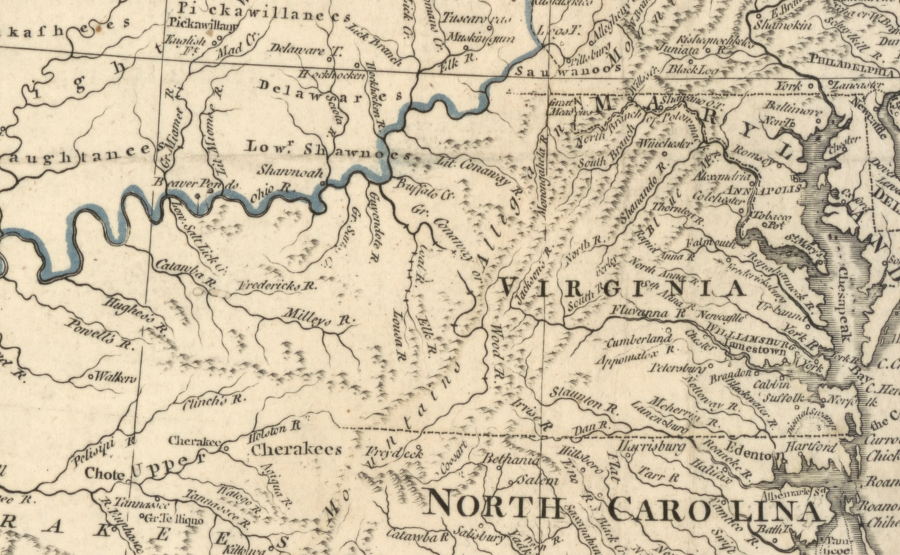
Library of Congress, The United States of North America, with the British & Spanish territories according to the treaty (by William Faden, 1783) showing Pittsburgh, Ohio and the "Canoway" rivers.


In order to secure the strategic mouth of the Kanawha river where it meets the Ohio (also known as Point Pleasant), Virginia raised a 100 man company under Botetourt militia officer Matthew Arbuckle, a veteran of Dunmore's war and the namesake of Arbuckle's fort on Muddy Creek in what is now Greenbrier county, West Virginia (for background information on that front see Frontier Defense by the McBrides or The Archaeological Conservancy's video). Arbuckle's company was organized as regular state troops (not subject to serving outside of Virginia without their consent) under the provisions of the Convention meeting in Williamsburg in July 1775.  "An Ordinance for Raising and Embodying a Sufficient Force for the Defence and Protection of this Colony...One other company, consisting of one captain, three lieutenants, one ensign, four sergents, two drummers, and two fifers, and one hundred privates to be raised in the county of Botetourt, and stationed at Point Pleasant, at the mouth of the great Kanawah...under the direction of, and subject to, such orders as they may from time receive from the commanding officers at Fort Pitt." (Captain Matthew Arbuckle:a documentary biography by Joseph C. Jefferds p43). The initial enlistment appears to have been for one year, and a second 100 man company was subsequently added to complement the garrison under Captain McKee, with a two year enlistment and bounty for the original company to continue on service (May 6, 1776 Captain Matthew Arbuckle by Jefferds p47).

McKee later testified that:

I do hereby certify that Matthew Arbuckle deceased was appointed a Captain in the Committee of Bottetout [sic: Botetourt] County (of which Committee I  was a member) in September 1775 agreeable to an Ordinance or Convention raising troops for the defence of the Western Frontiers for one year and was continued a Captain two years longer in a subsequent ordinance or convention; which time he serv’d in the capacity of a Captain being together with all the troops stationed on the Ohio [River] incorporated into the 12th Virginia regt. on Continental Establishment in an Act of Assembly passed October 1778[?]. the term of service ending October 1778 and the pay being from Continental paymasters at the [two undeciphered words] mentioned except the [undeciphered] two Mo’s pay [undeciphered word] above which [undeciphered word] of Colo. [undeciphered] Harrisson [sic: Benjamin Harrison, Jr.] who was Commissary and Paymaster for the State of Virginia in that Department. Given under my hand this 13th day Sept. 1784. (Signed) Wm McKee [William McKee] Capt. 12th Virg’a Reg’t. Department of War/ Accountant’s Office/ January 12th 1799

Arbuckle's company mobilized and left Fort Pitt by May of 1776. George Morgan (Of the famous merchant firm of Baynton, Wharton & Morgan and by that time acting as Indian Agent for the middle department) wrote Lewis Morris on May 16, 1776, that "Captain Arbuckle, with a company of Virginia Forces, departed from hence yesterday for the mouth of the Great Kenhawa where they are to rebuild the fort and to remain until further orders from the Convention. I thought it necessary to send an Indian with them, and a proper message on the occasion to the Delawares and Shawnees, accompanied by one of his officers, which I am sure will have a good effect." (Captain Matthew Arbuckle by Jefferds p44).  The Dunmore's war era fort at Point Pleasant, Fort Blair, had been abandoned and subsequently burned by Indians.  Arbuckle's company arrived and built a new fortification, Fort Randolph, named for Peyton Randolph of Virginia. By October of 1776, Arbuckle's company was reorganized on paper as the 5th company of the 12th Virginia Regiment (Captain Matthew Arbuckle by Jefferds p44). 


Clothing and Equipment of Arbuckle's company

 Detail of a Map Cartouche from the October 1775 Issue of The Pennsylvania Magazine 
(The Ann S.K. Brown Collection, Brown University)


The men enlisted in Arbuckle's command appear to have provided their own arms (apparently all rifles) and clothing. Arbuckle wrote to General Edward Hand on October 6, 1777 that he had "...no country arms. Every man a good rifle his own property in good order; scarecely 200 flints in the garrison." (Captain Matthew Arbuckle by Jefferds p87). John Entsminger's pension application states that "...in the same month of October at the same Keeney’s Fort, he inlisted  under Lieut. James Gilmore & was enrolled in Capt. William McKee’s company for the term of two years, attached to what was called the Western troops and was marched to Fort Randolph at the mouth of the Great Kanhawa River [Great Kanawha River] where Capt. Matthew Arbuckle commanded two companies, he being the senior captain, and continued at that station for two years, & was then honorably discharged in October he believes in 1778 having for this time furnished his own rifle & clothing for which he has never received any compensation during which time he was engaged in several sharp skirmishes in one of which his Lieutenant William Moor was killed at his side."   


 Rifle Trigger Guard Fragment Excavated at the Market House site [Williamsburg, Virginia],
 artifact #00022-12AE-00067-AG
Photo by Jim Mullins with permission of The Colonial Williamsburg Foundation

Three men of the garrison lost rifles and clothing in a boat accident as they were transporting provisions down the Ohio from Fort Pitt, two of which seem to have been distinctive as they had brass boxes [N.B. having viewed scans of the original document as shown below the linked transcription by Mr. Harris is in error and the rifles had brass boxes NOT brass barrels].  This potentially implies the majority of the rifles in the garrison may have been less expensive wooden boxed rifles.
 
 William Grills lost a "Brass Box Rifle, an Exceeding Good One..."

Men of the garrison who later consented to joining the other companies of the 12th Virginia with the main (Continental) army outside of the state of Virginia successfully petitioned for the value of their rifles as they had been entitled to an allowance of 20 shillings per year under the terms of the original enlistment as a state regular battalion.

To the Honourable Board of War
Geo Lyne Majr 12th Virginia Regiment
in behalf of fourteen soldiers of Capt. Michael Bowyers Company of the said Regiment,
begs leave to Petition that their Rifles, Powder Horns &c. may be recd. by the Commissary General of Military Stores & that they are receive for them a reasonable Price. The matter Stands this: by an Ordinance of our Convention this Company amongst others was raised for the purpose
of Defending our Frontiers & not to be drawn from thence without their consent, and each man that furnished himself with a Rifle was to receive for the use thereof 20S Per Annum, since which these men have been taken into the Continental Service & marched with their consent from the Monongahalia to this place that they had neither an opportunity of selling them, or lodging them at their homes: No Man's Goal in support of the common cause oughtto operate to his prejudice, that I trust they will receive the value of their Rifles & refer to the Capt's list inclosed.
May 19, 1777 George Lynne Maj.

Petition of Geo Lyne
Maj 12 Virg Bat
read 20 May 1777
prayer granted


Deserter descriptions from the Pennsylvania Packet show clothing worn by some of the men who likely left the garrison for service with the main army and point to the general use of hunting shirts with trousers.


An additional 12th Virginia deserter description from the 13 August 1777 issue of the Pennsylvania Gazette as quoted on page 177 of Phillip Katcher's Uniforms of the Continental Army mentions "Four deserters wearing hunting shirts...Three also wore leather breeches, while the fourth wore trousers or overalls." I have not yet been able to acquire a scan of this particular ad and it may yield further context as to which portion of the 12th Virginia is in question among other details. Knapsacks seem to have been in use by the garrison, in addition to the above deserter description for James Halstead that mentions a knapsack, the pension application of William Pryor mentions the use of them at the Fort in the course of describing the near mutiny caused by General Hand's order reducing the garrison's provisions and pay.


  Detail of  an Iroquois tumpline or hoppus ( Am1983,23.1 ) in the British Museum 
Captain Arbuckles Estate included "1 Beeded Hoppis"

Officers, or at the very least Captain Arbuckle, seemed to have been dressed in "regimentals" as they are referenced in and 1851 deposition of Nancy Edgar (Captain Matthew Arbuckle by Jefferds p102). Captain Arbuckle was killed in 1781 by a falling tree in a storm (the same tree struck Nancy Edgar's father), and his probate inventory (Captain Matthew Arbuckle by Jefferds p97-99) contains several items worth noting:

"Coat Jackett & britches shoes stockings...hat & stock with gloves...1 Beeded Hoppis...One riffle gunn & shot bag...One silver stock buckles knee buckles & sword buckles...1 large silver handled butcher knife..."

A discussion of  Virginia’s Independent Frontier Companies by Gabriel Neville can be found here at JOTAR
 
Although not in Arbuckle's company, a Tory Rifleman named Sergeant William Grant is worth investigation. Grant was drafted and enlisted in the 50 man "Capt.  Michael  Bowyers's  Company  of  Riflemen,  to  be  stationed  at  the  mouth of  the  Little  Kennarah  [Little Kanawha] upon  the  River  Ohio." He was for a time posted in the Tygart's valley during the Cherokee campaign (likely at Westfall's fort in Beverly WV) and deserted to the English army during the Philadelphia campaign of 1777 while in the 12th VA (alternate link here). His narrative illustrates how some of these frontier companies ended up with the main army.
Friday, August 17, 2018

South Union Mills 18th century clasp/cuttoe folding knives Guest Product Review


Blog Guest Contributor Justin Meinert has graciously sent in a product review of an exciting new reproduction folding knife available from South Union Mills


"Justin Meinert has been an avid reader of "Of Sort for Provincials" since 2010 and has yet to get his book signed. Readers are most likely to see him standing at the Forks of the Ohio, or on a red clay hill-top in Iredell County N.C.. He is always searching to make the hobby affordable and enjoyable for folks from Pittsburgh. He enjoys "gasback buttons" and chicken served in a cup. "

Justin's comments and images are below.


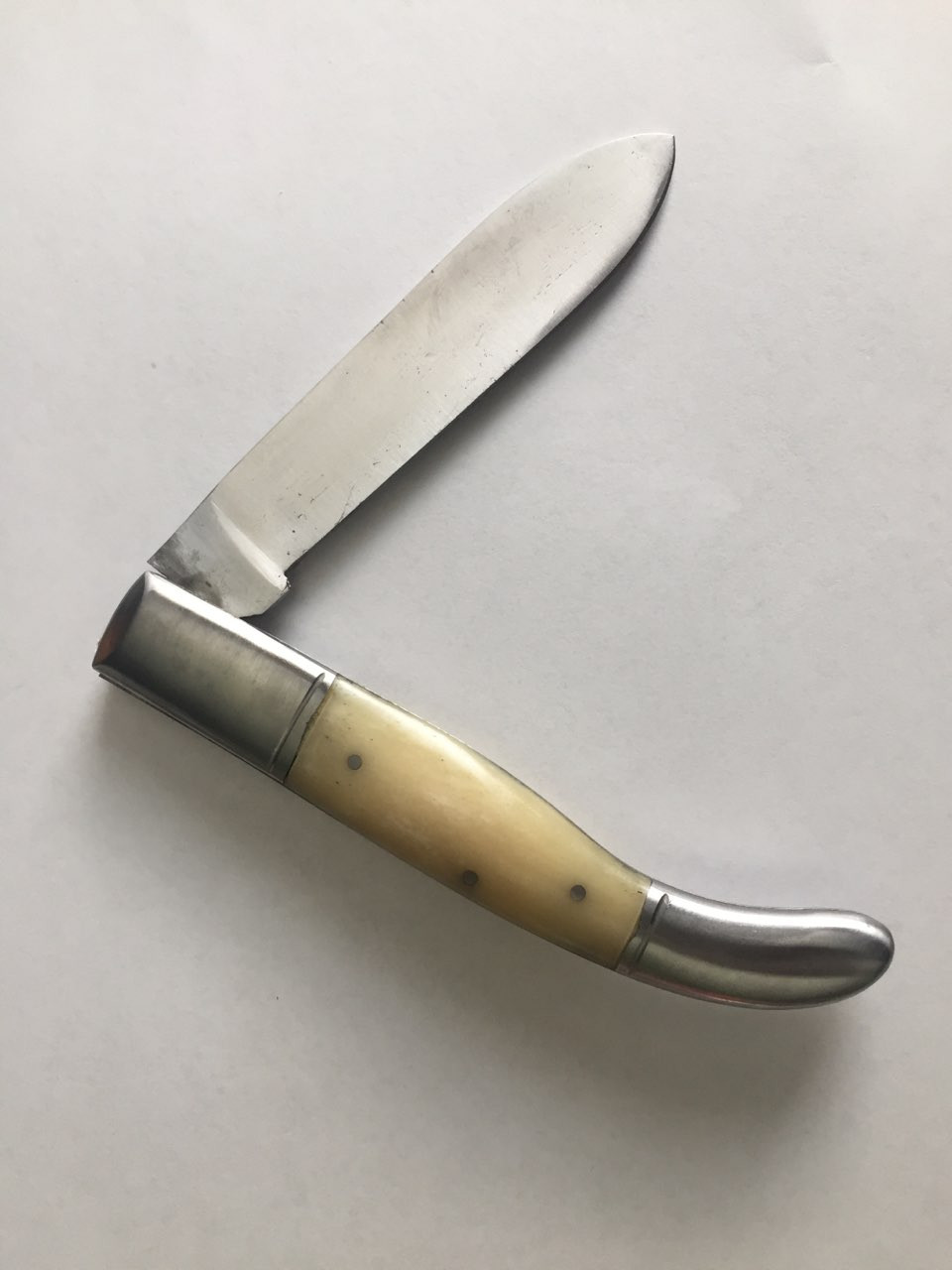
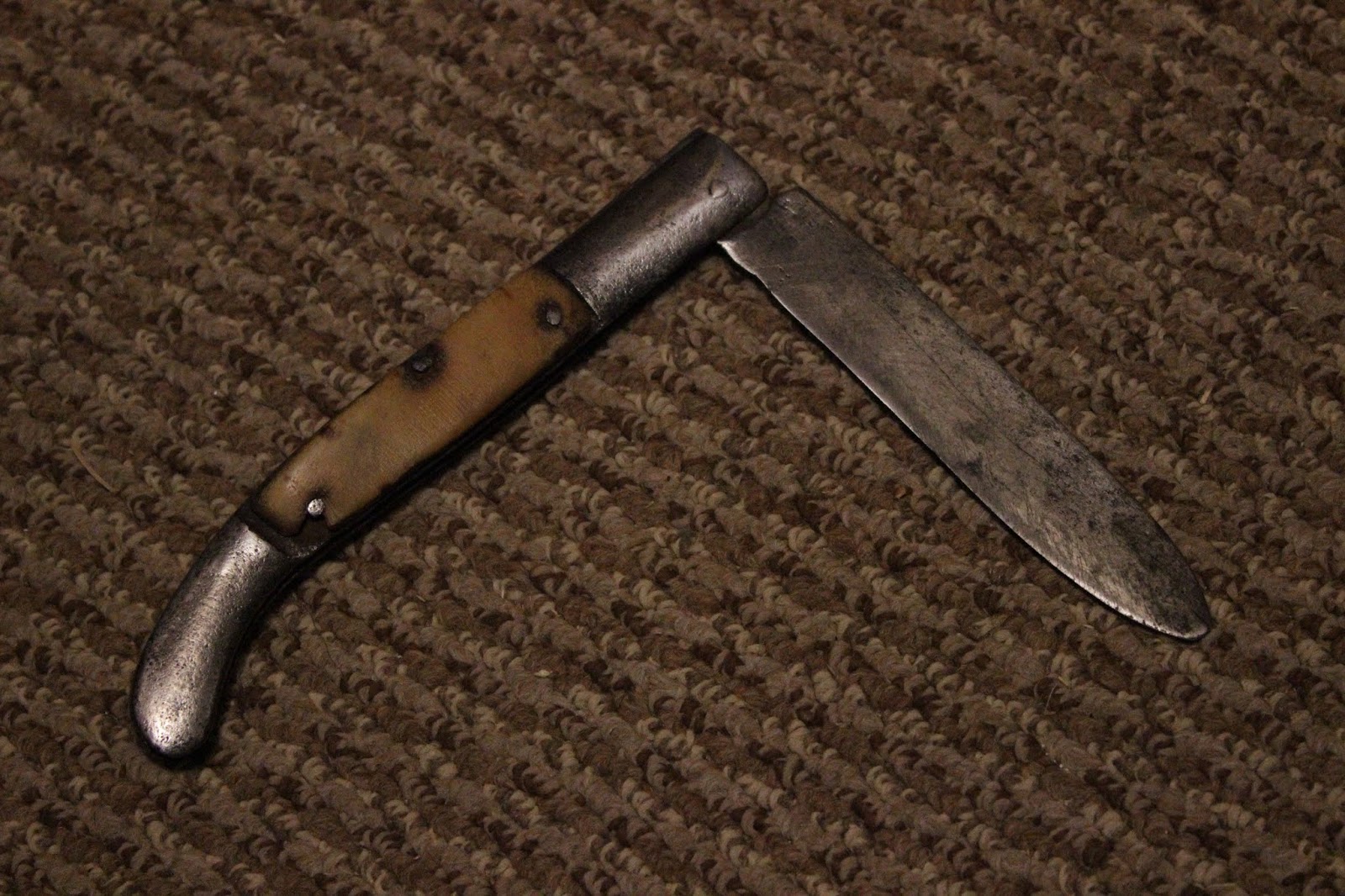
"For any reenactor that has opened an archeological dig from any 18th century site a particular style of clasp knife is sure to be seen. This regularity of such a common item should lead every reenactor to have such an item as “Pocket Trash”.  Further google searches for this clasp knife has hopefully lead you to “Cutteau Knives Revealed” a now five year old article that the authors spell out the details to lead you to buy the perfect  18th century clasp knife.


Knives from Archaeological Investigation of Fort Ligonier, 1960-1965 by Jacob L. Grimm 

However in those past five years, truly the only source for what was a common cheap knife was from custom makers with a price tag usually in excess of $200. For the purist among us these knives do not disappoint. Like a coat from Henry Cooke, these are true reproductions. However a coat has never fallen out of my pocket and traveled to a different dimension where items like socks from the dryer can never be recovered.


So like many when the email came from SouthUnion Mills, advertising for an 18th century reproduction knife I spent the money ($18 for the small, $33 for the large). But how does it compare with an original of similar size?


First the Good.

  1. Low Price  - Reenactors are cheap….even the so called (progressives) or (librarians)
  2. Steel Bolsters - Most cheaper overseas produced knives for some reason have brass bolsters
  3. One Foot Rule- At this distance these match most details found on originals. I.e. no nail nick in the blade.


The Bad

  1. Bolsters are two piece Overseas manufacturing making it easier to construct….this generally makes the knives thicker.
  2. Spring does not taper….Saving steel in the 18th century see’s tangs and springs taper..these do not again leading to a “thicker” knife.
  3. Blades, although I haven't used it yet these overseas produced knives generally do not hold an edge very well. 


-Overall length opened 9.86 SUM repro vs 9.75" original
[N.B. original has had some blade tip losses as can be seen above]


-Blade length 4.40"s SUM repro vs 4.2 [N.B. original has had some blade tip losses as can be seen above]


-Thickness at ends of bolster 0.46"s SUM repro vs 0.32 original


-Middle thickness 0.61"s SUM repro vs 0.50 original

 South Union Mills repro knife bolsters

Note how thin the original bolsters are and the taper.


  In general….For the price and availability I will continue to recommend these to folks, for the purist among us of course there is nothing that can replace the thinner, more accurate (and significantly more expensive) copies by artisans such as Scott Summerville.