Monday, March 27, 2023

Linen Shot bags

 A somewhat oddball item pops up every now and then in primary documents- the linen shot bag. Generally speaking, this is encountered as a military issue "make do" item in the absence of the more typical leather pouches for 18th century American soldiers, but there are English sporting treatises that mention a similar item:
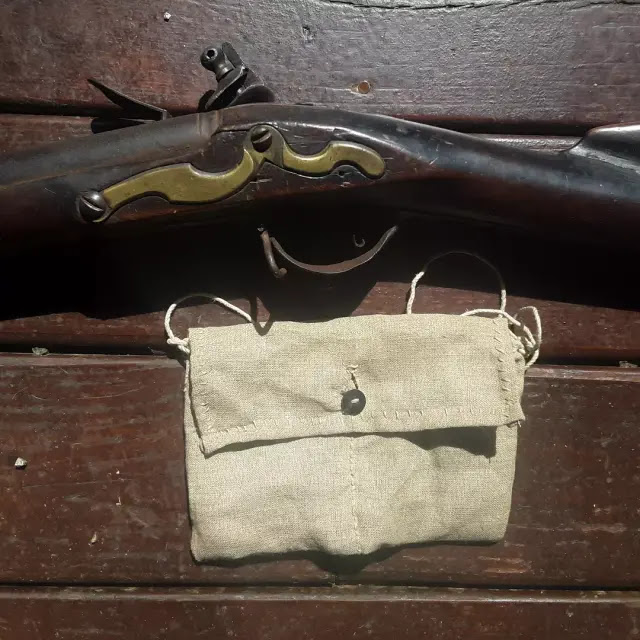
 

 Conjectural linen shot bag based on multiple period accounts and the crudely sewn Hutchins pouch.


"Our Shot of sev'ral sorts, half round the Waste, In Ticking semicircularly plac'd," (Pteryplegia London, 1727)


"A leather pouch, or small canvas bag, to carry the shot; with a tin, or other measure..." p9 (A Treatise on English Shooting; by GEORGE EDIE, Gent. London 1772).

Shortages of both cartridge paper and ready made shot bags forced French and Indian War Provincials to utilize such linen pouches. 


 “The Col. Is desired to collect in Virginia as many Powder horns as can be got, all that can be had from Pensilvania shall be ordered... For Shot Pouches, osnabrug [a course, unbleached and cheap linen] will be bought, with thread to make them one yard will make 8 bags.”  (Bouquet to Washington June 13, 1758 George Washington papers p 208).   

"I have us'd my best endeavours to get my Men equip'd with Powder Horns and Shott Pouches, and have procur'd 330 of the former, and 339 of the latter; besides the Linnen ones, with which we are compleated." (George Washington to Henry Bouquet, July 3, 1758, two same date ).

Osnabrigs widths are hard to come by, but the intrepid Steve Rayner found the references below:

‘78 yards brown linen at 15d (33 ins wide, nearly)___£4_17s__6d
100 1/2 yards white oznabrig at 10d (28 ins wide)___4__3s__4d
100 yards brown oznabrig at 7 1/4d (27 ins wide)___3_11__0d
24 1/2 yards Russia drab (28 ins wide)_____________1__42__6d...’” p. 130.


Hall, Douglas;In Miserable Slavery: Thomas Thistlewood in Jamaica, 1750-86.” University of the West Indies Press, Kingston, Jamaica. 1999.


Observations on the Present state of the Linen trade Robt Stephenson, Dublin 1784; an additional hat tip to Steve Rayner

Keeping in mind that osnabrigs in the period were generally around 28 inches wide, it would seem that if using the whole amount for a pouch the beginning fabric dimensions would be around 9 x 14.  Similar arrangements seem to have been used by the Revolutionary War 2d Virginia Regiment.

 October 12, 1775:  “… Each Company is to draw a sufficient Quantity of Dutch or Russia Drilling to provide Each Soldierwith a Shott Pouch with a partition in division in the middle to keep buckshot and bullets separate.  Each Soldier to make his own sack and Shot Pouch as near one
General Size Pattern as possible…”


 “The Captains in the there Respective Companys are to fix up the Powder horns & Shot Bags.  When both are finished & See that proper Belts & Stoppers are Provided, where Shot Bags only are Ready the must be Fixed with Belts & 6:  Cartridges of Powder and also Six Bullets Deposited in Each Bag & Dilivered to the Soldiers Respectively.”

(Tartar, Brent, editor. "The Orderly Book of the Second Virginia Regiment, September 27, 1775-April 15, 1776." Virginia Magazine of History and Biography, 85 (April, July 1977), pp. 156-183, 302-336.)

Various notations in the Virginia public store for shot pouches indicate the 2d Va shot bags were made of "Twill" and "Duck" linen.  The "belts" are likely fabric straps similar to those sewn to haversacks. 


Georgia


Order Book of Samuel Elbert, Colonel and Brigadier General in the Continental Army [2d Georgia Battalion] Headquarters, Fort Howe, 1778 [6? May 1778]

"Commanding officers of corps are to see that such of their men as are without do immediately provide themselves with powder-horns and as many have not the proper means of carrying their cartridges, application must be made to the Deputy Quarter Master General, for leather or canvas to make pouches for supplying the deficiencies..."


Massachusetts

 
1756, 4- Making up Snapsacks, bullet bags, tents, leather for buttons, Vol. 249, p. 56-2 (1) Massachusetts Archives Collection 
 

North Carolina

 Enoe Camp Friday May 10th 1771.

The Commanding Officer of each Detachment will send to Mr. Hogen this morning for the Quantity of Ticking, Gartering, Thread and Needles to make shot Bags which they will Immediately get made by the Taylor of their Respective Detachments to be Distributed to their several Corps that wants them.

“His Excellency Govt. [sic] Tryon to Johnston & Thackston,
1771_______________________________________________Dr.
May 7. To 1 quire paper______________________________£0__1__4
___11. 674 yd. Bedtyke for Shotbags,
    4s. 4d.______________________________£1__7__1
    47 yds. Cotton for blankets and
    tools, 3s._____________________________7__1__0
    6 oz. thread for making Do, 6d__________0__3__0
    3 pr. Garters, 10d._____________________0__2__6
    5 doz. Vest Buttons for Shot-
    bags, 10d.____________________________0__4__2
    1 brod. hoe, 5s. 8d.; 1 quire paper,
    1s. 6d._______________________________0__7__2
    21 yds, osnabs. for hunting-Shirts,
    1s. 3d._______________________________1__6__3
    2 oz. thr’d, Do, 6d.____________________0__1__0
    Cash paid for making Do.______________0__9__0 - 11__1__2
___14. 5 narrow axes, 7s. 6d_________________1_17__6
    3__________Do, 6s. 6d.________________0_19__6
    3 broad____Do, 7s. 6d._________________1__2__6
    1__________Do________________________0__6__8
    2 blanketts for the Hospital, 1s. 11d____1__8__0 - 5_14__2
___________________________________________________--------
Rec’d June 20, 1771, the Above Acc’t in full.__________£16_16_10
    Johnston & Thackston.” p. 455.


Letter from Jethro Sumner to Horatio Gates

September 15, 1780, Volume 14, Page 616

Camp Near Salisbury, 15th Sepr., 1780.

Sir:

I arriv'd here last even'g, and my encamping ground about half Mile in front of Salisbury, a little to the left of the road lead'g to Charlotte. I saw Colo. Lock; he informes me that he moves to day with the party under his Command towards Charlotte. The Guns, & wagons out of repair, I am geting fix'd.
Cartridge box's. I substitute a pouch of Deer Skin & Canvas and shall be diligent untill provided.


In addition to these intriguing, yet vague primary sources there is a surviving 6.5 x 13 inch linen pouch with Revolutionary War provenance at the New Hampshire Historical Society.

Shot Pouch. Canvas. Said to have been carried by Levi Hutchins (1761-1855) of Concord, NH, at Bunker Hill, 1775; Credit Line: Gift of John B. Hills Object ID: 2005.042.03


Combining the above accounts allows a conjectural reproduction to be made within the fabric allotments stated. The Forbes expedition references give us a material size, but lack further information on carriage, yet Virginians a scant  17 years later are making a divided pouch that may have been very close to the example used by Levi Hutchins. 

Thanks to the several folks who have shared info on this topic, in no particular order: Todd Post, Justin Mienert, Steve Rayner, Greg Theberge, and Joel Bohy, apologies if anyone was left out.


Thursday, March 16, 2023

Save the Date: Dunmore's War 250th Anniversary encampment August 31st, 2024


 These sons of the mountains renowned of old...All volunteered freely to go
And conquer their foeman like patriots bold, Or fall by the Ohio.


What: Dunmore's War 250th Anniversary encampment September 28th, August 31st, 2024. The encampment will be centered around a Composite/Model Company scenario, portraying a volunteer company of Virginians in September 1774. Participation is juried, and by invitation only. Emphasis will be on quality, not quantity,  and participants will be doing some interpretation for the general public during daytime hours. Impression guidelines, event goals/extras and contact information will be added in the coming months.

When: The Weekend of September 28th, August 31st 2024.

Where: Historic Smithfield, Blacksburg, Virginia at the site of a volunteer company encampment in 1774.

Wear: Civilian clothes with the majority of participants in unbleached linen "Osnabrigs" hunting shirts and blue woolen "Indian leggings".


Thursday, March 2, 2023

Fowling pieces and Shotguns of Colonial Virginia

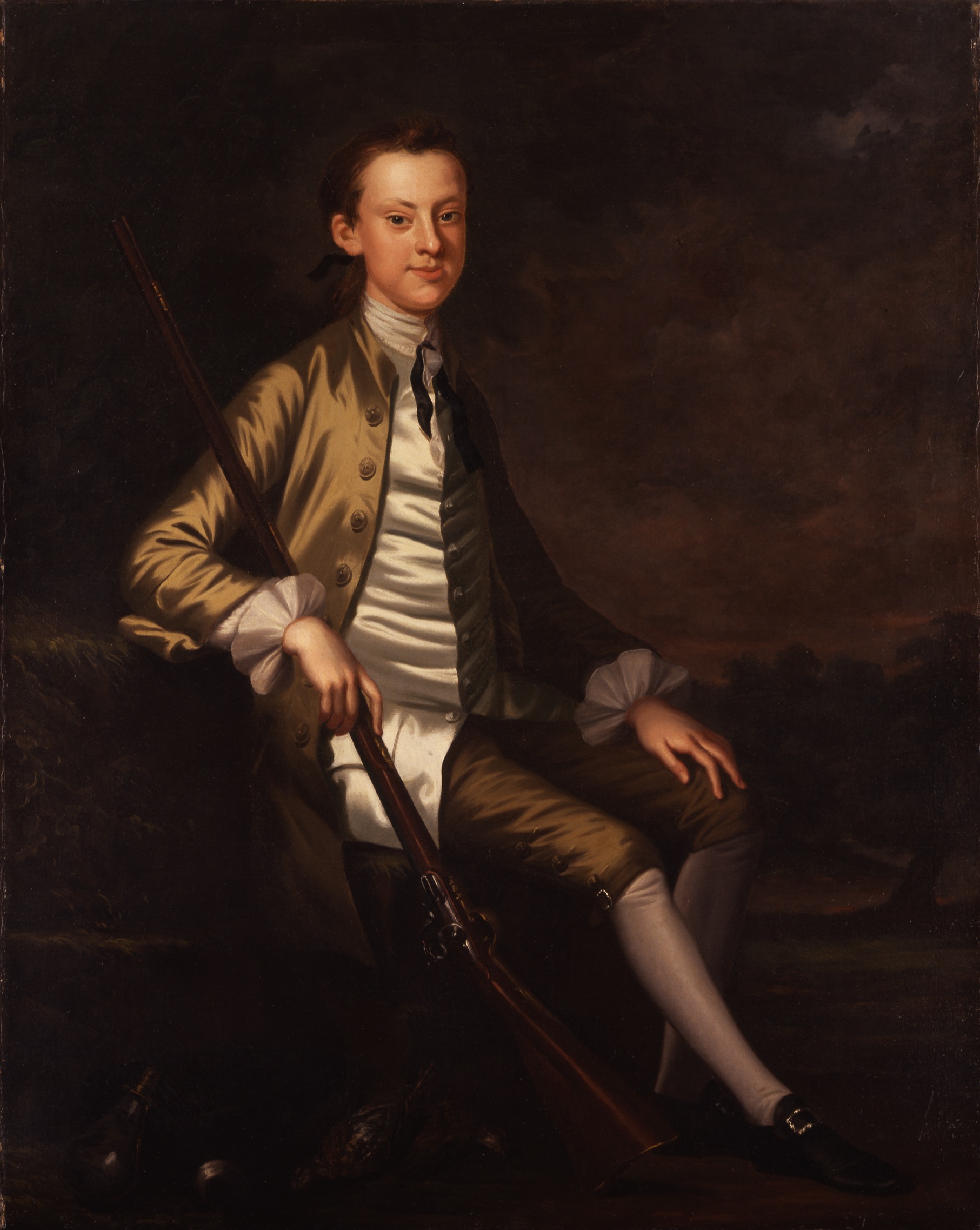
Portrait of James Lewis ca. 1772 by Charles Willson Peale at Colonial Williamsburg Foundation emuseum Note the blued barrel, keyed or wedge "sliding loop/sliding bolt" fastener, and brass mounts.

Undoubtedly the most common form of civilian firearm in Colonial Virginia; the fowling piece was a useful and versatile item capable of taking both large and small game depending on the size of the shot and charge that was used to load the piece. Advertisements and primary documents from the era point towards a predisposition in Virginia towards imported English fowling pieces, frequently with walnut stocks and around a four foot long barrel. Bores in the 1/2 inch, 5/8s inch and 3/4 inch range predominated. Some colonial era stores stocked fowling pieces (commonly referred to as "guns") at various price points. Customers could purchase ready made stock on hand, place orders with their custom specifications though their local stores, or, (in the case of the more prosperous gentry) order directly with English factors or Gunsmiths in England. Prices ranged due to the quality of locks, mountings and embellishment. 


English Fowler by William Staples of Birmingham (d 1771). Private Collection

 Alexander Henderson's Virginia Colchester Store Letterbook has the following order information from 1761:  

1 doz. Guns at 10/per gun...1/2 doz. Guns at 15/per Gun + "PS at the Request of two of my very good Customers, I beg leave to add- 2 good & well fixed guns, the Barrell to be 4 feet 4 inches long and of good Substance, the Bore to be three quarter of an inch Diameter, with a very good Lock & Plain mounting- 1 ditto, the Barrell the same Length & substance with the above, the Bore to be half an Inch Diameter with good Lock & plain Mounting- These three Guns I would chuse to be very good but not too costly and I fancy London is the best place to order them from."  


Brass trigger guard finial from a fowling piece excavated at Point of Fork Arsenal in Virginia. Giles Cromwell collection.

 Invoice- London October, 1767, George Washington Papers June 6, 1765-March 9, 1775:

"1 Handsome fowling Piece 3 feet 2 inches in the Barl 3/4 inch bore, fine silver Mountg, with Water pan Lock, Walnut Stock, barrel blewed within a Silver Sight, a false britch and sliding bolts, worm to the Rammer & List Case [cost 8/8/0 ]" Gill Gunsmith in Colonial Virginia p13 


David and William Geddy advertisement. Virginia Gazette, August 8, 1751 
 
 
Imperfect cast brass wrist escutcheon from the Geddy site, Williamsburg Va. James Geddy and Sons Colonial Craftsmen. Colonial Williamsburg Archaeological Series No. 5 page 22


Although very affordable imports were widely available prior to the Revolution, it was sometimes advantageous to repair older fowling pieces. Williamsburg Gunsmith James Geddy advertised in 1739 that he had on hand "a long Gun, about 6 or 7 feet in the Barrell, was brought by a young Gentleman of Gloucester County, to me, the Subscriber, in Williamsburg, to be new Stock'd and Lock'd..." (Gill's Gunsmith of Colonial Virginia p28)


A composite long fowler from the Woodson family of Virginia survives in the collections of the Virginia Museum of History and Culture. The gun features an 0.80 caliber recycled 17th century barrel that is approximately 6 feet long, a round faced lock by Collicott of Bristol dating prior to 1773, and is brass mounted with reused Long land style British musket furniture. Overall length is 89 inches. A 1738 advertisement by James Geddy mentioned "large Guns fit for killing Wild-Fowl in Rivers." This very long barrel is indicative of such a use. Shorter, lighter guns were generally favored for upland hunting. Virginia Militiaman Thomas Kitchens mentioned "When I went out to Guilford I took my small shotgun..." in his pension application.


John Page portrait from Colonial Virginia Portraits showing some interesting fowler details and a flask.
 

Jim Kibler recently uploaded a great video on the aesthetics of English fowlers from this period.


Friday, August 19, 2022

For the Virginia Troops, a Quantity of Cloathing, 1778

"...for the Virga Troops a Quantity of Cloathing..."


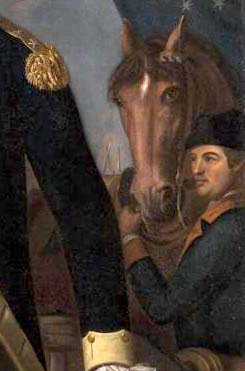
Detail from Charles Willson Peale's 1780 portrait of George Washington after Princeton, Mount Vernon.


In the fall of 1778 a quantity of waistcoats and breeches were issued to the Virginia Continental line.

“...Resolved, That the Governor be requested to order by the first opportunity, as much baize from the public store, as will make waistcoats, to be sent for the Virginia non-commissioned officers and soldiers in the Continental army, and delivered to them gratis, and also such worsted or woolen caps, as may be in the said store, and one thousand blankets.”
H.R. McIlwaine, ed. Official Letters of the Governors of Virginia, Richmond, 1926, Vol. I, November 14, 1778

At least 1,711 of the 2,068 waistcoats appear to have all been constructed of red fabrics other than baize:

784 Red flannel Waistcoats
435 Best Red Cloth Waistcoats
492 Red Serge Waistcoats
(John Moss and Christian Febiger, October 29, 1778, Invoice for Blankets and Clothing, Washington papers)


To George Washington from Colonel Christian Febiger, 4 November 1778 From Colonel Christian Febiger Elizabeth Town [N.J.] the 4th of Novbr 1778.

May it please your Excellency By Order of Generall Woodford I have been in philadelphia and gott made up and procured for the Virga Troops a Quantity of Cloathing Viz. 2194 pair of Breeches, 2068 Vests, 2200 Shirts 1294 Blanketts some Caps, Shoe Buckles etc. etc., which I have brought on with me, Those Goods the Governor of Virginia has order’d either to be sold to the Troops at the Reasonable Rates mention’d in the Invoice or given gratis to such men as have not receiv’d their Quota allow’d by Congress for this Year.1 Major Genl Lord Stirling order’d me to take our proportion out at Pompton where our Brigade now is, an[d] as he had Reasons to think, that the other two Brigades would soon be order’d into Jersey, he directed me to receive your Excellencys Commands, whether their proportions should be sent them immediately or be stored on this Side till they came. I have been inform’d of your Excellencys Orders, that no Cloathing should be issued to the Troops, untill a sufficiency arrivd to Cloath the whole Army.


The 2,194 pairs of breeches were made up in the following colors and farbrics:

“1903 Blue & Green Cloth Breeches…291 Pair Red Serge Breeches”
(John Moss and Christian Febiger, October 29, 1778, Invoice for Blankets and Clothing. The Writings of George Washington from the Original Manuscript Sources, 1745-1799. John C. Fitzpatrick, Editor.)


A manuscript by General William Woodford (dated September 11, 1778) that recently went up for sale at Heritage Auctions enumerates the colors, variety and types of cloth available in this issue. It is likely that the blue breeches contained in the 1903 Blue & Green Cloth breeches" were "light Blue" given the amount of light blue cloth in the inovice.


"Invoice of all the goods brought to Philadelphia from Virginia for the use of the Troops of that State, as per the report of Lieut. Colo. [William] Heth who was sent with instructions from the Brigadiers & Field Officers of the Virginia Line to take charge of them upon their receiving an acct. from Mr. Stark of their arrival this the 21st of August 1778...


Cloth Swatches ca. 1765 from The Exeter Cloth Dispatch Book, 1763-1765

7 1/2 Peices of Scarlet Broad Cloth 175 3/4 yds.
10 ps Buff Do ...287 3/8 yds.
26 ps light Blue do...712 yds.
8 ps Coarse Do...290 yds.
9 ps Mid. Green Do....337 yds.
1 ps Coarse Do...33 yds.
8 ps Coarse Red...300 yds.
12 ps Do Do...397 yds.
4ps fine Black...113 yds.
1500 yds Coarse brown Linen, a large proportion of which is little better than Crocus
664 dozn of Hose...
1300 pair of Shoes
1707 Shirts
3155 pr Shoes
576 Shirts
444 black Stocks
144 ready made short brown vests, without any kind of facings
625 yds coarse blue Shalloon
no kind of Trimmings except a large quantity of very indifferent green Thred
The Goods sent up last winter from Virginia were committed to the care of three Officers who delivered them out pr orders from the Virginia Brigadeers & kept an exact acct. of the articles delivered... "

Saturday, July 30, 2022

Inventory of Stores at Vause's Fort 1757

(1756) George Washington Papers, Series 4, General Correspondence: George Washington, Diagrams of Frontier Forts. [Manuscript/Mixed Material] Retrieved from the Library of Congress, https://www.loc.gov/item/mgw442497/.

In 1756 the privatly owned (and variously spelled) Fort Vass/Vause/Vauxe in modern Shawsville, Virginia, was burned during a French and allied Indian raid by a war party led by Battle of the Monongahela veteran François-Marie Picoté, sieur de Belestre II. Vause's fort was possibly simply a fortified log house or perhaps a two story log "blockhouse" as it was described in the in the Boston and New York newspapers. As part of a defensive "Chain of Forts," Virginia Provincials were assigned to rebuild a "one hundred feet square in the clear" fortification at, or near the site of the original fort on Vause's property.
The location of the second (Hogg's) fort at Vause's has been confirmed, the location of the nearby original (burned) fort has yet to be determined. For information on the archeaology at Fort Vause see "The Second Fort Vause" by Kim McBride (The Archaeology of French and Indian War Frontier Forts. ). Despite being able to pinpoint the outline of the second fort and bastions, McBride writes that "No evidence was found of construction methods of the curtain walls or other structures that connected the bastions...if this construction was entirely above ground, it has likely been obliterated." It is worth noting that the Council of War recommendations for building these forts suggested "Stockades to be 14 feet long" implying walls made of vertical logs placed in the ground. Unless traces of the post molds have been obliterated by plowing, the earthen walls of the second Fort Vause may have been constructed in the same manner as those of Fort Loudon in Winchester, Virginia; described by Andrew Burnaby as "logs filled up with earth."
Colonel George Washington checked on the construction progress in October of 1756. The location was considered very important as "..The fort at Vass's (which Capt. Hogg is now building) is in a much exposed gap; subject to the inroads of the Southern Indians, and in a manner covers the greatest part of Bedford and Halifax." [November 9, 1756. A Plan of the Number of Forts, and strength necessary to each extending entirely across our Frontiers, from South to North.]
Captain Peter Hogg's efforts at fort construction were slow and expensive, additionally payroll irregularities led to him being stripped of his command. Washington wrote to Hogg in July of 1757 that:
I have great complaints made concerning your manner of carrying on the works at the Fort you are building. It has cost infinitely more money than ever was intended for it. and, by the injudicious spot of ground you have chosen to fix it upon, it has caused a general clamour.
Mr Bullet and Mr Fleming inform me, that you refuse to do the necessaries belonging to it.
I therefore desire you will immediately upon receipt of this, deliver up the company, arms, stores and fort, to the command of the former; that the Kings Service may not suffer: You are to take Lt Bullet’s receipt for every thing delivered to him.

Hogg was ordered to compile an inventory of stores to turn over to Lt. Bullet in 1757, a transcription of which is below.

"Inventory of the Stores Belonging to ye Garrison at Vasses
To powder Gross Wt---Lbs 106
To Bullets 264lb
To Firelocks-9
Do Same -9
To Gun Barrils-7
To Militia Muskets-2
To Bayonets not in Repair-8
To Cartridge Boxes of Militia-16
Do of Comp ye[?] Worn out-8
To Deserters Coats-2
Do Vests-1
Do of Britches-1
Do of Hatts [?]-1
Do of Stocks do-1
Do of Blankits[Blankets]-8

To Baggs-14
To Flower Lib Wt 3857
To Beef Dried Lbs Wt 1383
To Hanged Porck Lib. Wt. 72 1/2
To pickling Tubs-13
of Brass Kittles-5
of Iron Do-3
of Horses Belonging to the publick-4
of Broad Hoes-4
of Spades-16
of Shovels-4
of Chissels-21
of Augers-16
of Gouges-5
of Broken Do-1
of Compasses-2
of two feet Rules-1
of Broken Do -2
of adzes-5
of Gimblets-5
of Hewing Axes-12
of Broken Do-1
Of Falling Do - 27
of Country made Do -14
of Whipsaws-4
of Crosscut Do-4
of Hand Do-5
of Claw Hammers-4
of Lathing Do-2
of Whipsaw Files-6
of Cross Cut do-1
of Handsaw Do -4
of Saw Sets-2
of Steal [Steel]-Lib Wt- 13 1/2
of Grind Stones-3
of Cordage in a Running Tackles 30 lb
of Hatchets-1
of Frying Pans -2
of Suits of Serjts Clothes-1
of Militia Swords-9
of Regimental Stockings 47 pairs
of Ladles--Worn-1
of illeg files illeg 2
of Corn in Store by Judg 1/2
of Capt illeg & Received of Do in hande of Lt] 22 Bush 60 Bushels
Note the Above Contains a True Coppy the Inventory of Stores by Capt Hog Deliveded as per my Rects [illeg] Bullitt"
[the origin of the tools listed above are on a seperate document in this packet titled " Accot of Tools Recd for Building the fort on Roanoke"- for example "Tools Sent from Winchester by the Waggon" A few items appear on the second list that are not on the first, for example "Ditto from fo Wm...1 Grindstone 2 iron potts 2 brass Kettles 2 frying pans 2 pewter Tankards Iron Laddle ... 1 Bar of Steel"

[on reverse] Inventory of Stores at Vauses Fort no-date

(1757) George Washington Papers, Series 4, General Correspondence: Peter Hog to Thomas Bullitt, August 4, Inventory of Stores. August 4. [Manuscript/Mixed Material] Retrieved from the Library of Congress, https://www.loc.gov/item/mgw442639/.

------------------------------------------------------------
1757 A Roll o fye Comp. of Late Capt. Hogs with Acct of theire State of Clothes Arms & c. Aug. 4
Name/Clothes of Compy/Arms of Do.
[Clothes of Compy]Coat/Vests/Brcs[Breeches]/hats/Shts[Shirts]/St-illeg[Stockings]/Shoes/[???likely Rowler Rollers/neckstocks]/Hav [haversacks]/Blankits/
[Arms] FireL/Bayo?/Cart B[?]
1. Jn. Johnston - Bayonet Strap wanting
8. Benja. Goss-Gun left by Maj. Lewis's order at Fort Dinwiddie
10. Moses [?] Burns - Gun lost when he deserted
11.David Tate -Blanket purchas'd by Capt Hog
13. Abm. Bledeso- no belt
15. Wm Blanton - no strap
26. Val [?] Mchiche [?illeg? Natl/Jas McBride???] - [Firelock] he brought from the Meddows & looks upon it as his own
29. And.w Fowler - Cartridge box & Bayonet lost on Sand creek

Tuesday, May 24, 2022

The Long Rifle in Virginia Exhibit: Abingdon Virginia

On a recent trip to Martin's Station/Wilderness Road State Park I stopped in to view a new rifle exhibit at the William King Museum of Art in Abingdon, Virginia. Although not surprisingly heavy on "Golden Age" rifles, there are a few early standouts that rifle aficionados will recognize from the RCA series, including the brass barreled rifle and a substantial amount of knives, horns and accessories. The "Virginian ^ A rifleman" image from Richard St. George's 1777 sketches is also on view. As an aside, the William King museum's other galleries were very enjoyable, including some southwest Virginia early decorative arts, and overall it is a great example of a successful adaptive reuse of an early 20th century school building. Well worth the trip to Wolf hills, and the exhibit runs until October, 31 2022.
The Long Rifle in Virginia
The long rifle was a surprise factor in winning American independence. A distinctive product of the backcountry of Pennsylvania and the Southern colonies, this celebrated rifle was essential for survival on the frontier.
“The Long Rifle in Virginia” will showcase more than three dozen curated long rifles and accoutrements from the 18th and 19th centuries that have never before been assembled in the same exhibition. The exhibition will explore the artistry of Virginia gunsmiths through demonstrations, a symposium, and a recreated gunsmith shop on location.
In addition, there is a symposium on October 14th and 15th 2022.

Sunday, October 24, 2021

THE STORY OF THE NEW RIVER: Blueridge PBS documentary

A new documentary that touches on some topics and locations mentioned elsewhere in this blog just premiered on Blue Ridge PBS and may be of interest to some of the readership. "The Story of the New River" is currently streamable (for a limited time) here for free and is also available for purchase from Blue Ridge PBS.