Monday, November 13, 2017

Georgia Continentals recruited in Virginia, or Crackers in linen kilts


At the beginning of the American Revolution, Georgia found itself poorly equipped to wage war, and a small and impoverished population did not help matters.  In his 1783 "An Address to the Army", Major George Hangar mentioned "...The Southern Colonies are over-run with a swarm of men from the western parts of Virginia and North Carolina, distinguished by the name of 'Crackers'...  

Many of these people are descended from convicts that were transported from Great Britain to Virginia, at different times, and inherit so much profligacy from their ancesters, that they are the most abandoned set of men on earth, few of them having the last sense of religion. When these people are routed in the other provinces they fly to Georgia, where the winters are mild, and the man who has a rifle, ammunition, and a blanket, can subsist in that vagrant way, which the Indians pursue; for the quantity of deer, wild turkies, and other game there, affords subsistence; and the country being almost covered with woods, they have it always in their power to construct temporary huts, and procure fuel..."
- certainly Major Hangar should have really let us know how he felt on the topic.

Another author, Baika Harvey, was more impressed in 1775:
"I am Just Returned from the Back parts where I seed Eight Thousand men in arms all with Riffeld Barrill guns which they  can hit the Bigness of a Dollar between Two & Three hundreds yards Distance the Little Boys not Bigger than my self has all  their Guns & marches with their Fathers & all their Cry is Liberty or Death Dear Godfather tell all my Country people not to come here for the Americans will kill them Like Dear in the Woods & they will never see them they can lie on their Backs & Load & fire & every time they draws sight at anything they are sure to kill or Creple & they Run in the Woods like Horses I seed the Liberty Boys take Between Two & Three hundred Torreys & one Liberty man would take & Drive four or five before him Just as shepards do the sheep in our Cuntry & they have taken all their arms from them and put the head men in gaile ...".

The state of Georgia initially authorized two battalions of Continentals in 1776, recruiting officers were sent into Virginia and the men recruited for service in Georgia's regiments were to provide their own clothing. Below are some rough notes on clothing and Arms for Georgia's Continentals from a variety of sources.

Savannah, State of Georgia, 2d Oct., 1776. Lieut. Col. John Stirk & ) Maj. Seth John Cuthbert;

Gentlemen: The Honorable the Continental Congress having voted two additional Battalions of foot to be raised for the Defence of this State,our convention have done me the honor to appoint me Colonel of the Second or musket battalion and have greatly added to that honor by the appointment
 of two such Gentlemen of Character and veracity to be my Field Officers, an appointment, be assured Gentlemen, which gives me infinite satisfaction. Let us then unanimously determine to bring into the field as soon as possible a Regiment of brave fellows who may be the Salvation of their Country. For this purpose you are, Gentlemen, to use all expedition in going to the state of Virginia where you will find that Mr. Wereat has distributed all the Commissions in our Regiment to such persons as were capable of raising men. ...The men have a Bounty of Seventy dollars and one hundred acres of land who enlist on the above terms; they are to pay for their clothing. Try to get good Muskets; we shall want in the whole Regiment One hundred and twenty good Riflemen to make two flying companies. Do what you can to get good drummers and fifers, at any rate buy some good drums and as none are to be had here you may have the Dragoons marked 1 to 8 with battalion upon them, but no more paint—it spoils the sound of a Drum..."


Clothing

Early clothing descriptions for these Georgia recruits are sparse (3rd Ga deserters some of whom originated in Amelia county Virginia- were described in the December 19th, 1777 Virginia Gazette as "in soldier's dress" and at least one man from the British 17th Regiment in "a light cloth coat and breeches with pewter buttons numbered 17"), but a few details are available:

 THE VIRGINIA GAZETTE December 6, 1776
TWENTY DOLLARS REWARD .DESERTED  from my company of the 2d Georgia  battalion, the following soldiers, viz. PATRICK DUFFY, an Irishman , about 5 feet 8 inches high, well made, full faced, wore a short blue jacket with sleeves half worn, and it is supposed was in the marine service. EMANUEL KELLY, country born, about 5 feet 8 inches high, a wheelwright by trade, is very fond of liquor, and wore an old hat, with clothes much worn. Whoever secures said deserters shall have the above reward, or 3l. for each. 

THE VIRGINIA GAZETTE NEWGATE, Loudoun  county, Feb.  20, 1777. DESERTED  from my company in the 2d Georgia  battalion, Patrick Duffy , an Irishman , who is fond of liquor, and has been in the marine service. William Hardy , born in or near Frederick  town, Maryland , about 6 feet high, well made, about 25 years old, wore a cocked hat, and buckskin breeches. Owen Cawfield  an Irishman , by trade a weaver, well dressed, and is a likely fellow; he sometimes works at brick making, and has lived in Alexandria. Charles Melton , born in Loudoun  county, near col. Russell's , and is supposed to be lurking about that neighbourhood. Charles Phillis  (but sometimes calls himself John Ferr ) 5 feet 6 or 7 inches high, very well made, seems to be religious at times, though I believe him to be a great villain, and lived near the Short Hills  in Loudoun  county. 

The Pennsylvania Gazette Philadelphia, June 26, 1777.
DESERTED  from the 4th Georgia  battalion, commanded by Col. George White, Esq; John Kaighn, an Irishman, about 5 feet 8 inches high, and 35 years of age, of a dark complexion; had on, when he went away, a hunting shirt, torn breeches, and a round hat....

Thankfully the Orderly book of Samuel Elbert survives and is very illuminating. By 1777 some of the men of the 2nd Battalion in Savannah were oddly enough clothed in linen coats and kilts


 Georgia Continental Currency ca. 1777 from Georgia Historical Society


Regimental Orders, 2d Battalion.
Savannah, 25th June, 1777

Colo. Elbert desires that the Officer Commanding each Company in the Regiment do immediately apply to the Quarter-Master for as much Osnabrigs as will make Coats & Kilts for their men; which they are to have made up without delay...in future all the Officers are to make a point of being present whenever the men are under Arms, as those who stand in no need of being any further instructed in the Art Military will be of great service in teaching others..."


 Brown linen short coat or jacket. Connecticut Historical Society 1981.110.0


Camp at Reids Bluff, 6, June 1778

        Shirts.  Shoes. Kelts.
Lt. Dragoons    16    12    16
1st Battalion   16    11    15
2nd Do        76    55    74
3 do         46    33    45
4 do         20    29    40

Total         174    140    190


Hats seem to have not been entirely uniform and shoes in short supply:

Head qrs., Savannah, 5th Dec., 1777

"[discusses plans to intercept  Florida Scouts] "...in which case you are both to wear white cockades-the enemy commonly have red in their hats-Ambuscades from the enemy is the most you need to be
 on your guard to prevent, your videttes will always give you timely notice, should they attempt to surprize your camp..."


General Orders
Head qrs., Savannah, the 31st Decemr. 1777

"...The soldiers appearing in the manner they do, with flapp'd hats, in any place (but more especially when on duty) is slovenly and unsoldierly. Hats, however ordinary, may surely be cocked...All officers are therefore injoined, but more particularly the officers of companies, to be attentive in endeavoring to make their men appear as decent and soldier like as possible..."

   
Camp Sattilia River, 21, June, 78

"...Commanders of brigades will have returns made them of such men as have no shoes, and have mockazons made for them out of the hides, the well calculated the number of hides necessary, that no waste may happen, which the commissary is to deliver to their order...The shirts, kelts, shoes and other clothing served out to the Georgia Brigade at Fort Howe, Reids Bluff and this camp, are to be immediately reported by the commanding officers of each corps to Colo. Elbert..."
 

Camp So. Side of St. Illa River, 24, June [1778]

Commanding officers of corps are to draw from the Quarter Master of the 2d Reget. the articles agreeable to the following list, which they are to serve out to such
of their men as stands most in need thereof...

        Shirts.  Shoes. Leggins.
1st Battalion   15    10    13
2nd Do        58    39    52
3 do         44    30    39
4 do         26    17    23
Lt. Dragoons    26    18    24

Total         169    114    151


Arms


Doglock musket similar to parts found at Fort Frederica.

Georgia began the Revolutionary war with a few varieties of older muskets on hand, other arms came with the recruits from Virginia and later, French sources. Pre Revolutionary war firearms parts excavated at Fort Frederica include English Indian trading guns similar to the Bumford trade gun as well as parts from Doglock muskets. Settlers coming to Georgia in the 1730s were sometimes provided with a musket and bayonet. Rifle culture appears to have made a strong showing; however, the few newspaper references I have been able to find for pre-Revolutionary war era Georgia used rifles are fairly vague. A deserter from Fort Barrington (Sept 10 1766) named James Sullivan who was born in Maryland carried off a rifle with a "very short barrel." Another newspaper advertisement for a stolen rifle mentions that it was "brazed in the middle, with a double trigger" (Philip Snyder 6/21/1769 Savannah).

Doglock catch from Fort Frederica.

The State of Georgia to Capt Sam’l Scott [3rd Georgia Battalion? ]
"...To 29 Rifles and 8 Smoth Do. at £8 Each 296"

John Mosby [2d Ga Battalion 4th company?]
" 22 Rifles, Screws & Moulds 122 " 45 Musketts and Fowling Pieces 225 " 3 Musketts Bayonetts' & accourtramts 18... 1 Gun and Screw 5 6...Do for powder Horns 6..."

Elbert's Orderly Book has some great additional arms oriented citations; he describes the Regiment's arms in July of 1777 as" Sorry trash I have at present being such a medley of Rifles, old muskets & fowling pieces, with a few French Traders, that I have no faith in them, not above fifty of the three Hundred Stand French Arms bought the other day in South Carolina, but what are either Bursted or otherwise totally unfit for Service."

In 1759, Savannah Merchant Thomas Rasberry was very specific when he ordered "...
1 Fowling Piece not to exceed 3 feet 6 Inches length of the Barrel plain Walnut Stock with plain brass Mounting a whale bone rammer and one of the newest fashion waterpan bridle Locks NB this Piece must be warranted to throw its load of swan shott into the Circumference of a rum Puncheon head at 80 yards distance If such a gun can be had that will answer this discription particularly in respect to the Carriage of the shott, the Cost will not be regarded & no other piece but one that will perform this will do & youl please to send with it a Mold for the swan Shott that the said barrel will carry such a distance..." (See p. 79 Hawes, Lilla Mills, ed.; "The Letter Book of Thomas Rasberry, 1758-1761."
In  "Collections of the Georgia Historical Society." Vol. XIII.; a hearty thanks to Steve Rayner for sharing that account).


Georgia soldier James Vallaton's decorated powder horn ca. 1778.  "The horn is decorated with a rattlesnake, tree, owl, pigeon, fish, dog, eagle, buck and rooster, as well as the writing "Don't [tread] on me, James Vallotton, 1778" Catalog Number A-1361-116


The Regiment seems to have utilized both cartridge boxes and shot bags/pouches with horns.

[2d Georgia Battalion]

Regimental Orders, 2nd Battalion
3rd April, 1777.

"...The Officers of each Company are to see that every man under their Command is Immediatley furnished with a good powder Horn; after a reasonable time, no excuse will be received for a breach of this Order, as any reasonable expense in procuring them will be allowed..."


Polly Transport, 4th May, 1777, St. Catherines

"...The Commanding Officer desires that particular attention be paid to the Order of yesterday & that of the first Instant; he will take an Opportunity of going onboard the different Transports in order to examine the men's Arms & Ammunition; by Applying to Mr. Seeds a little Oil will be obtained to oil the Arms & Keep them from rust; each soldier is to have powder in his Horn & look to all in their Pouch with proper Wadding, exclusive of the Cartridges in their Pouch, which are to be Kept full with three spare flints pr. man;..."


 1761 Oconostota Commission image likley showing a Cherokee powder horn slung to a shot pouch.
Military Commission Granted to Chief Okana-Stoté of the Cherokee by Governor Louis Billouart, Chevalier de Kerlérec 1761

Regimental Orders, 2nd Battalion
12th July, 1777.

"...The regiment to parade precisely at four o'clock this afternoon, each man with as much loose powder in his Horns as will make Nine rounds, with black moss [Spanish Moss] for wadding;
 the Colo. can have no doubt but that every man in the Regiment has a powder Horn slung to his pouch after so many repeated orders for the Purpose, as the Companies are
all informed they are in future when every under arms to appear in them..."

 Firearms parts, including fowling gun parts from Fort Morris,Georgia.

Savannah, 18 July, 1777.

"...I send you a return of my Regemt. together with as Exact account of their Arms and Accoutriments as could be procured at this time, many of them being on out Commands. Could you by any means furnish me with good Muskets and Bayonetts for my men it would make me Happy, the Sorry trash I have at present being such a medley of Rifles, old muskets & fowling pieces, with a few French Traders, that I have no faith in them, not above fifty of the three Hundred Stand French Arms bought the other day in South Carolina, but what are either Bursted or otherwise totally unfit for Service.
You may rest assured that I shall pay due respect to your Recommendations of Mr. Bradly. I am with much respect, Dear General,
Your most obedt. Servt.,
                           S. ELBERT. "

"General Howe.
Regimental Orders, 2d Battalion.
                                     Savannah, 21st July, 1777.

All the small smooth bore pieces are to be sent to Mr. Richards the Gun Smith, who will fit them with the best of the Bayonetts & Iron Rods of those French Guns that were landed, the Officers by applying to Mr. Cooper will get Horns for their men, the Co1o. will order payment for what may be bought, frequent complaint being made that the Soldiers destroy Horns in Town for want of Firewood; the Quarter-Master is ordered to take such steps as to have a regular supply
 of that article in future."

General Howe.
Savannah, 6th Decemb. 1777

Dr. Sir: The letter I give you for Genl. Howe, you are to proceed to Chas. Town with, and in case he can't furnish you with the arms for your regt. try if possible
 & purchase what are necessary, but take care that they are fit for service & with good bayonetts; purchase or have made pouches & belts likewise, and I will give orders to our quarter-master general to make payment.  General Howe will assist you in this matter.  If you succeed in procuring the arms and your regt. are not passed, change their route and let them call & take them, but should this not be convenient either hire wagons or a boat & have them transported here immediately. I am, dr. sir,
 Your most obedt. servt. S. ELBERT.


Order Book of Samuel Elbert,
Colonel and Brigadier General in the Continental Army

[2d Georgia Battalion]

p96

Headquarters, Savannah, 29th Jany. 1778
"...Commanding officers of companies are immedieately to have each man of their company furnished with a former exactly fitted to his gun; and as the calibers may not be equal, commanding officers of battalions are directed to have boxes prepared to deposit cartridges in seperate bundles, which bearing some mark to distinguish to which gun they belong, no mistake, confusion, or delay may happen in serving them out when necessary..."

p97
Gneral Orders
Headquarters, Savannah, the 2d Feby. 1778
Parole-Motte.

Commanding officers of battalions are immediately to have bullet moulds made for their several regiments; if the caliber of the guns is equal, two to each regiment, casting four or five bullets on each side will be sufficient, but if there should be a variety of different bores a greater number of moulds will be wanted, in which case they need not be made to cast so many. The regiment they belong to must be marked on each mould..."

Headquarters, Fort Howe, 1778 [6? May 1778]

"Commanding officers of corps are to see that such of their men as are without do immediately provide themselves with powder-horns and as many have not the proper means
 of carrying their cartridges, application must be made to the Deputy Quarter Master General, for leather or canvas to make pouches for supplying the deficiencies
..."


"M.G.O.
Camp So. Side of the St. Illa River, 24th June. [1778]

The army marches to-day. Every man is to have his horn filled with powder, his cartouch box well furnished, carry thirty rounds of loose powder & ball and
two spare flints pr. man
; four days' rice is to be served to each man..."

Pension application of William Willoughby S36396 fn9GA
Transcribed by Will Graves 5/14/10

2nd Battalion

I certify that William Willoughby a Private Soldier has Delivered all his Arms Acconrments [Accoutrements] and Ammunition. That is his Musket, Cartridge Box and eighteen rounds of Cartridges
Augusta 28th day of August 1779
S/ George Handley
? Major 1st Geo. Cont. Regt.

Willoughby's 18 rounds may indicate the use of an 18 hole cartouch box. On November 19, 1756 there was an “Order in Council for Small Arms & Ammunition to be sent to Georgia” (p104 55/412) for “Five hundred Small arms of the Dutch Fabrick...with Bayonets and Scabbards... Cartouch Boxes with Straps of 18 Holes...”


Tuesday, October 31, 2017

Some brief notes on Ethnic Dress in Colonial America

 ethnic

1 a :of or relating to large groups of people classed according to common racial, national, tribal, religious, linguistic, or cultural origin or background

b :being a member of a specified ethnic group
 
 
One of the challenges in living history/reenacting is presenting a nuanced, well thought out portrayal of any of the many diverse ethnic groups that were coming to America in the 18th century. How would one pull off a believable portrayal of a Highland Scottish Loyalist at say, Moore's Creek Bridge or a German immigrant in the Shenandoah Valley?


I am reminded of a friend who is originally from Scotland being repeatedly congratulated on his (presumed faux) accent when portraying John Murray, Lord Dunmore; but cunning linguist, piper down, and SNL jokes aside, I will focus on clothing for this post, which is certainly not a complete compilation, as much as a place for me to share notes, images and ideas as I come across them, hopefully updated as new information and sources come to light.

Germanic & Dutch Clothing


NB: For now I am lumping "German" and "Dutch" together, as they are at times blurred in Anglo correspondence. Trends that initially stick out are conservative dress, "long sleeves open below," "Bavarian" or "Dutch" flap leather breeches, old outdated fashion square toed shoes, black stocks.  The subtle differences may have been hard to discern, as Swede Peter Kalm described the Dutch in Albany as dressing "however like that of the English." Speaking of Sweden, Gustav III's 1778 Model Drawing for the Swedish National Man's Suit can be found here.


De misleyden by Cornelis Troost (c.1720-1750), Rijksmuseum

The Pennsylvania Gazette
 February 2, 1744
 RUN away, on the 8th Instant, from William Baker, in Chesnut Street Philadelphia, a Dutch Servant Woman, named Catherine Vernon, lusty and well set. fair Complexion, drest after the Dutch Fashion , dark Petticoat, short calico Jacket, dutch Cap, white Apron and Handkerchief, dutch Shoes with Nails in them; the said Servant can talk pretty good English, and has been in this Country about three Years. Whoever takes up the said Servant,and secures her so that her Master may have her again, shall have Forty Shillings Reward, and reasonable Charges paid by William Baker.


"Bavarian" style leather fall front breeches from Diderot


The Pennsylvania Gazette, Philadelphia, November 24. 1749.
Run away, last night, from William Williams, in Bucks county, New Britain township, a servant man, named James Hayes, about twenty years of age, of middle stature, sandy complexion: Had on a new cotton cap, large felt hat, commonly cock'd up, a tammy coat, full trimm'd before, with some of the buttons off above and below, with a brown camblet lining, a pale tammy jacket, lined with Bristol stuff, old leather breeches, with a flap before, or Dutch fashion , oznabrigs shirt, blue stockings, calfskin pumps, with block tin buckles; he has also with him, a cloth, serge, and flannel jacket, without sleeves; he stole from his master twenty dollars in silver, and a considerable quantity of paper money, the value not known. Whoever takes up said servant, and brings him to his master, or secures him in any goal, so that he may be had again, shall have Three Pounds current money of Pennsylvania, and reasonable charges,paid by WILLIAM WILLIAMS. N.B. He is an Irishman, but speaks pretty good English.

1756 dated military issued infantry shoes, Swedish Army Museum


Pennsylvania Gazette, Aug. 29, 1754
August 29, 1754
RUN away on the third of May last, from Capt. Robert Harris, of Rocky river, in Anson
county, North Carolina, two Dutch servants, viz. a man and his wife; the man named Hermanus Haggen, about 30 years of age, of a low stature, with black hair: Had on, an old hat, blue coat, brown jacket, with brass buttons, and square toed shoes; and had a bag on his back, of a large bulk. The woman named Catherina, in a Dutch dress, with a damask petticoat, and a brown one, can speak some English, and have a little white dog with them.


Pefroen and the Sheep's Head by Cornelis Troost Mauritshuis, dated 1739

 The Pennsylvania Gazette,February 7, 1776
THREE POUNDS Reward.
 RAN away from the subscriber, living in Worcester township, Philadelphia county, a German man servant named PHILIP PETER MILLER, he has a scar on the left side of his mouth, a fresh coloured visage, and dark brown bushy hair; had on when he went away, a light blue coat, after the German fashion , with long sleeves open below, a short blue jacket,white short woollen breeches, with a large patch between the legs, blue stockings, new shoes with odd buckles, a large German hat much worn, a black German stock made of horse hair, with a yellow stock buckle; he is about 5 feet 5 inches high, and cannot speak any English. Whoever takes up said servant, and secures him, so that his master may have him again, shall receive the above reward, paid by me.


Irish Dress


At this point I have not come across much in the way of distinctively Irish 18th century clothing in America (or for that matter unique Ulster Scots/Scots Irish), but I would refer anyone contemplating such an impression to view The Cries of Dublin & C: Drawn from the Life by Hugh Douglas Hamilton, 1760 for contemporary images. Mara Riley notes that "...around the late 1500s to early 1600s, Scottish Highland clothing became more distinct from Irish clothing of the same period.  Whereas the Irish began to wear clothing that more closely resembles that of the common English peasantry..."

Scottish Dress
I highly recommend Mara Riley's page for a great rundown of Scottish costume. 

One of the few instances of documentation of  Highland dress in Colonial America involves the Highland settlers imported by the Trustees of Georgia in the 1730s (Colonial Records of the State of Georgia, Vol 29 p190):

 Mr. Provost Lindesay thinks the properest Clothing for the Servants will be a short Coat and short Hose of Tartan and a Tartan Plaid the Coat and Hose of abt. 12d. a yard Sterling and the Plaid abt. 14d. The Trustees allow as far as 19s 3d Sterling for cloathing of each Servt. which makes the Cloathing and Bedding 1.5s together some of the Servts may want more than others for the present with the addition of Shirts, Bonnetts, & wt. they wear on their feet therefore as far as 19s/3 each for 40 or so many of them as shall be shipped the Trustees will pay yr. Draught for as well as the 20s each for engaging which yr. Accot. with the Trust will discharge by the engaging & cloathing of such Servts. at £1.19s.3d each.

I shewed Mr. Beans [McBeans] Letter to Mr. Oglethorpe & you are desired to buy for the Trust to be used in Georgia for the Highlanders there & now going 300 yards of Tartan at 12d. Sterling a yard for short Coats & short Hose & 1200 yds. of Tartan at 14d. Sterl. a yard for Plaids to be packed in a Bale & mark’d G&C Tartan of which Bale please to send the Dimensions of length, Breadth & Depth to settle the freight therof with the Owner here & let yr. Capt. sign 3 Bills of Lading for it one whereof please to inclose to Mr. Causton the other the Capt. will keep & the third please to send to the Trustees.

 It should be noted that it is very likely these Highlanders quickly adopted the warm climate friendly linen clothes including trousers and breeches that seem to predominate early Georgia clothing accounts.

Colonial Records of the State of Georgia, Trustees’ Letter book 1732-38, 21 January 1737

“…Cloating vizt....Womens Gowns/ 8s each /12 Gowns for women…Stuff for women’s gowns/ 12d p Yard /83 yds. Of Stuff for Gowns...Ploding/ Do [same price as Stuff for gowns] /21 1/3 Yds. Of Ploding...Tartan/15d a yard/27 Yards Tartan...Scotch Broagues/2s a pair/21 Pairs of Scotch Broagues...Grey Cloth/2s 6d a yard/10 ½ Yds of grey Cloth….[other notations]Canvas Breeches/19d a pair/6 pair of Canvas Breeches..."
 

If one is portraying a Highland Scotsman after 1746, the Dress Act has to be considered:

Abolition and Proscription of the Highland Dress 19 George II, Chap. 39, Sec. 17, 1746:

That from and after the first day of August, One thousand, seven hundred and forty-six, no man or boy within that part of Britain called Scotland, other than such as shall be employed as Officers and Soldiers in His Majesty's Forces, shall, on any pretext whatever, wear or put on the clothes commonly called Highland clothes (that is to say) the Plaid, Philabeg, or little Kilt, Trowse, Shoulder-belts, or any part whatever of what peculiarly belongs to the Highland Garb; and that no tartan or party-coloured plaid of stuff shall be used for Great Coats or upper coats, and if any such person shall presume after the said first day of August, to wear or put on the aforesaid garment or any part of them, every such person so offending ... For the first offence,shall be liable to be imprisoned for 6 months, and on the second offence, to be transported to any of His Majesty's plantations beyond the seas, there to remain for the space of seven years.

Tartan Plaid Fragment from Flora MacDonald's wedding dress ca. 1750. MacDonald came to North Carolina in 1774, her husband Allan MacDonald raised a Loyalist militia unit in Anson County and was captured at the Battle of Moore's Creek Bridge.

Kilts seem to have been rarities here in North America, and the only instance I have found in runaway or deserter ads after 1746 is an Irishman!

 The Pennsylvania Gazette, July 16, 1761
Fort Pitt, June 24, 1760.
 DESERTED from this Garrison, SAMUEL PELLTON, Serjeant of Captain Paul Dehaus Company of the Pennsylvania Forces, about five Feet seven Inches high, a round Face, disfigured about his Nose and Mouth with the Small Pox, curled brown Hair, between 25 and 28 Years of Age: Had on and took with him his Regimental Clothes, red Calimancoe Breeches, and a Pair of Leather Breeches, and some other Clothes not remembered; he was born in the Jerseys, and had a Silver Watch, with a single Steel Chain. Also RICHARD WORREN, Corporal of Capt. Samuel Neilson Company of said Troops, about five Feet three or four Inches high, about 22 or 23 Years of Age, born in the North of Ireland, speaks good English, has a smooth Face, and is a great Gamester at Cards: Had on blue Regimental Clothes, and had a Highland Plad Kealt , which makes him remarkable when he wears it, he also had blue Cloth Breeches. They both have the [?] locks with them. Worren was in the Jersey Service last Campaign, and as they are both acquainted with that Part of the Country, and are sly smart Fellows, tis thought they are gone that Way, or to New York. As it is supposed they broke open and plundered a Store the Night they went away, whoever takes up said Deserters, and brings them to this Garrison, or secures them in any Goal in this Province, so as they may be brought to Justice, shall have Eight Pounds Reward for both, or Four Pounds for each, paid by the Officers to whom they belong.


Original 1725 Tartan Plaid at the Scottish Tartans Museum in Franklin, North Carolina.

That being said, "Tartan plaid" does show up in some post 1746 references- both in newspapers and store inventories (Montgomery's Textiles in America has a bright swatch illustrated from ca. 1750).


The Pennsylvania Gazette, September 27, 1759

Just imported in the last vessels from London, Bristol and Glasgow, and to be sold at the lowest rates, by SPEIR and STUART, In Water street, near the Corner of Walnut street, opposite Mr. Abraham Usher Store,
Three qr. and 7 8ths check linen, check and striped hollands, Irish linens, chiefly low price, Scotch check handkerchiefs, bed ticken, yarn and worsted stockings, green and white thread ditto, shaloons, calimancoes, thicksets, Scotch plad, or Tartan , blue bonnets, kilmarnock caps, figured and Highland garters, plain kenting handkerchiefs, net and spot figured and flowered bordered gauze and lawn do. plain lawn and gauze, flowered, striped, sprigged, netted, spotted and parisnet do. men and womens ruffles, cambricks and clear lawns, Scotch numbered thread, coloured and stitching do. Scotch snuff in bottles, calicoes, everlastings, mohair and metal buttons, horn do. mohair, men and womens gloves, beugles, ivory and horn combs, plain and silvered stay hooks, knee and shoe buckles, glass, brass and stone sleeve buttons, men and womens thimbles, table knives and forks, razors, taylors shears, Barlow, buffaloe and common penknives, cuttoes, butchers knives with sheaths, desert ditto, horse scissars, common and
razor metal do. shoemakers knives, awls and tacks, gimblets, needles, pins, thread and quality binding, and sundry other articles, too tedious to mention.
  
Fort Lewis Boyd's store inventory of the plantation and  the store in Southwest Virginia dated September 25, 1766 contains "50 Yds. Tarten Plaid .......... 7/16/ 3" 

 For further info on plaids, I recommend http://www.scottishtartans.co.uk/


Scottish Footman in a plaid waistcoat, breeches and bonnet
"GILLEE Wet Feit"  Attributed to Paul Sandby, 1749 

An exception or omission in the Dress Act's plaid kilt and upper garment prohibition seems to have been used to wear plaid waistcoats both in Scotland:

"The Apology...A tour in Scotland 1769 by Thomas Pennant
But when crossing and jostling come queer men of G*d,
In rusty brown coats and waistcoats of plaid ;
With greasy cropt hair, and hats cut to the quick.
Tight white leathern breeches, and smart little stick ..."


and in America (although the date of the ad vs. the Dress act should be noted):

THE VIRGINIA GAZETTE, August 14, 1746
RAN away from the Subscribers on the 31st of July  last Three Servants , viz . Daniel M' Craw , a Scots -Highlander , of a short Stature, speak broken English , about 5 Feet 2 Inches high,
of a ruddy Complexion, with short curl'd Hair: Had on when he went away, a coarse Bear-skin Coat, with Brass Buttons,a Pair of brown Linen Trowsers and Shirt. He belonged in Mr. C Dick , in Fredericksburg .
John Ross , a Scots -Highland  Boy, about 16 Years of age, of a ruddy complexion, full-fac'd, speaks broken English , and has his Hair cut: he carried with him an Oznabrig Shirt, a Pair of Oznabrig Trowsers and Breeches, a Tartan waistcoat without Sleeves, lin'd with green Shalloon, a brown Holland and a white Linen ditto, a Silk Handkerchief, a Felt Hat, and a Leather hunting Cap. he belonged to Mr. John Mitchell , in Fredericksburg ...Whoever apprehends the said Servants  and brings them to their Masters aforesaid, shall receive a Pistole Reward for each, besides what the Law allows. Witness our Hands this 21st Day of July , 1746
 
Exceptions do exist, the Clothing the Carolinas blog turned up a 1771 inventory for a Cumberland County, North Carolina man named John Curry who had "1 tartan Coat." 


In addition to plaid waistcoats, (with ever present brown or blue coats or jackets), a Scot's bonnet (as worn by William St. Clair above) might be worth considering for this impression.


Original Bonnet at Fort Ligonier via a bonnet discussion found here.

Some traditional Scottish weapons such as highland pistols and broad swords (such as Nicholas Ruxton Moore's Scottish broad sword in the link) were imported here but seem to have been somewhat rare compared to English goods.


Weighing the Lead Bars, Lead Processing at Leadhills, Scotland by David Allan, ca. 1789.
The man at far right appears to be wearing a "Maude"

Another Scottish affectation worth looking into is the (possibly more commonly Lowland) black and white checked mantle known as a "Maude", also discussed here.
A Poor Edinburgh Father of Twenty Children
David Allen Ca. 1785 National Galleries Scotland

Wednesday, June 7, 2017

New publication: The Cromwell Collection


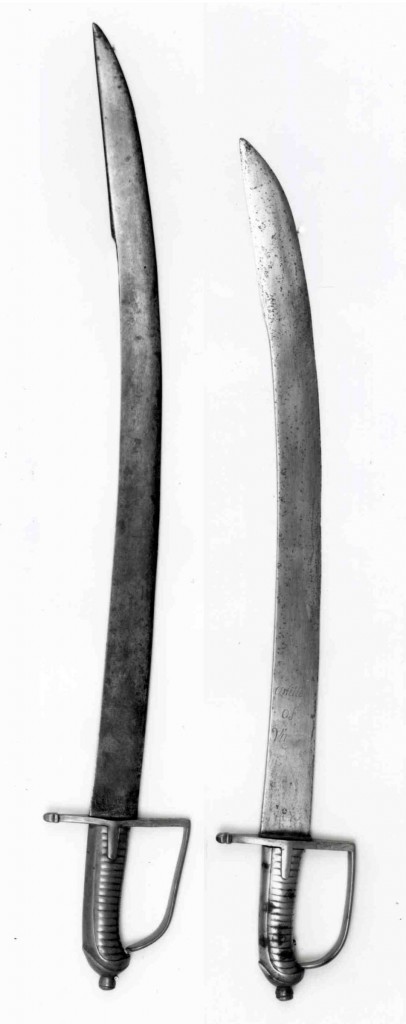
I recently perused a copy of noted researcher and collector Giles Cromwell's new book: The Cromwell Collection: Virginia Weapons and other Materiel of the American Revolution.  The author is a long time Virginia arms researcher and collector who I have the honor of considering a friend. Cromwell's previous work includes his definitive study on the 19th century Virginia Manufactory of Arms (published in 1975) and his excellent (1995) account of the Revolutionary War importation of French Swords for Virginia.

French Grenadier and Artillery of Virginia hangers ca. 1779 from 
Cromwell's French Swords for Virginia (linked above).

The hardbound tome is over 300 pages long and highlights his wide ranging private collection- featuring many full color images and descriptions of 18th century firearms, edged weapons, various militaria, contemporary frontier art, Virginia related ephemera, and excavated artifacts. Of particular interest is the inclusion of dug firearms parts from the Point of Fork arsenal and other Virginia sites that can be used to pinpoint several specific types of arms (numerous pre 1754 French musket sling swivels, an unsigned Potzdam style musket lockplate and etc.). Cromwell's text is well written, and includes supporting information from primary documents, period maps, dig reports, as well as family/dealer provenance from prior sales. Copies of this very informative and well executed book can be obtained here, and will be a welcome addition to the reference library of any 18th century arms enthusiast.

Tuesday, May 23, 2017

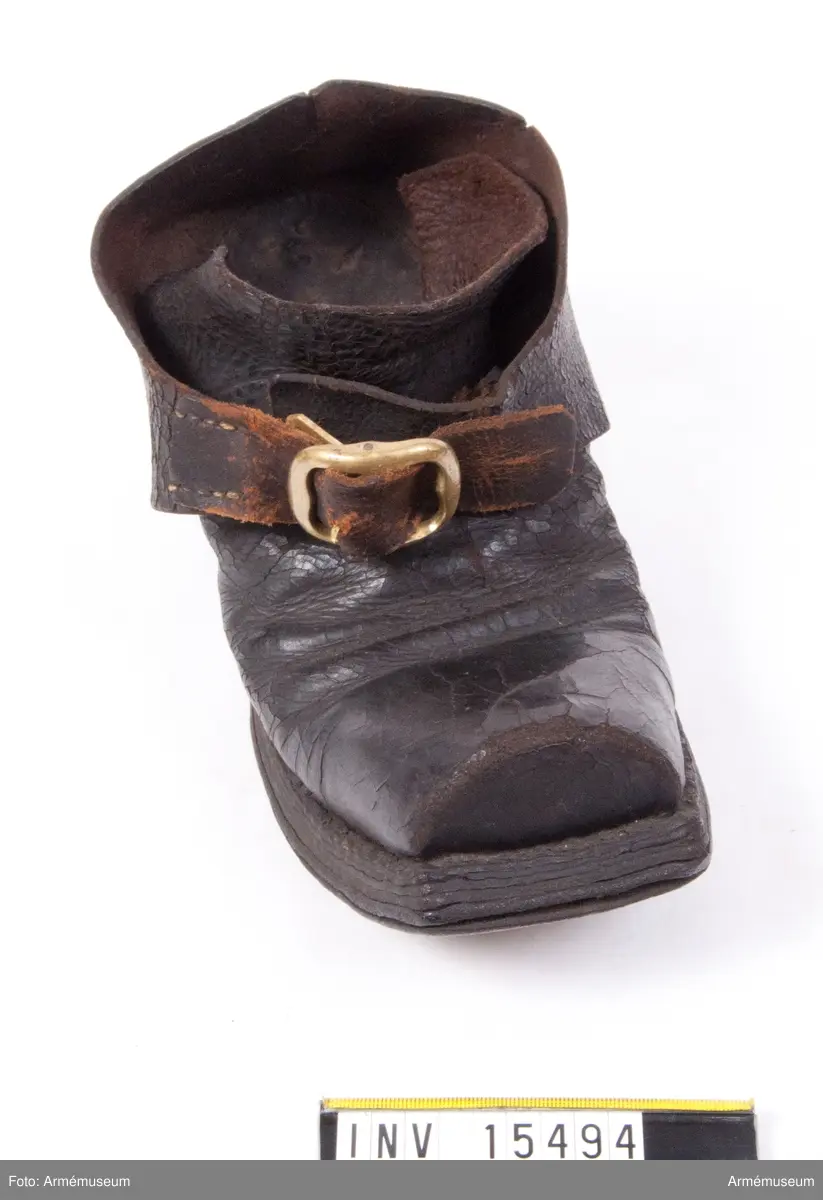
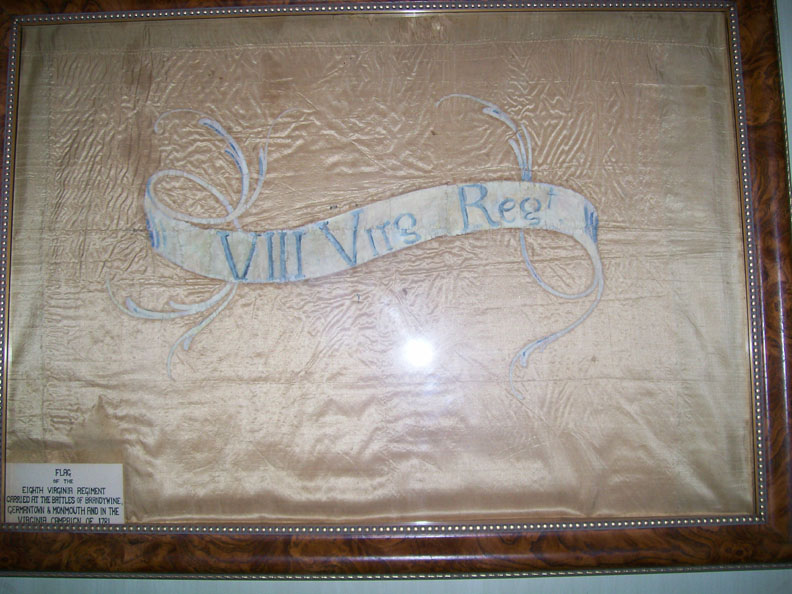
An account of Shoe repairs; apparently for the 8th Virginia Regiment ca. 1776


An interesting account listing shoes, as well as shoe and moccasin ("To Soleing one pair of Mongesons") repairs was recently shared with me (shown above, courtesy Nathan Barlow), Although the unit is not named, the expenses above for "Captain Jonathan Clark"includes the name John Hoy.  Johnathan Hoy appears to have been in Clark's company of the 8th Virginia Regiment and both men's names are mentioned in this 8th Virginia pension application.

VIII Virg Regt flag discussed here.

The 8th Virginia attribution is further corroborated by a Muster roll for Clark's company of the 8th in the same year that lists Clark, John Hoy (Sgt Mjr), and appears to also confirm George Walker (#10), Joshua Williams (#4),Walter Wumer (#55) and possibly some others from the shoe account above.


This info has been added to an older blog on Moccasins and shoe packs

Monday, March 13, 2017

1777 Dunmore County Volunteers equipment appraisals


In the fall of 1777, volunteer companies from several Virginia counties formed and elected their officers in preparation for a relief mission to Fort Pitt.  An appraisal of personal arms and equipment from Captain Thomas Buck's Dunmore (later renamed Shenandoah) county company survives, ostensibly to aid in repayment should those arms be lost or damaged while on the campaign.


Thomas Buck's headstone

 Although not a complete account for the entire 44 man company (the remainder may have been using public arms, although Buck's own pension application  states that there were "no public stores to resort to"), several interesting things jump out, such as the ratio of rifles (6) to smooth bores (8) and the extreme high cost of rifled arms in comparison to the smooth bores (£11-8 vs £2.5).  For the most part the listings are typical for militia "accouteraments" and contain guns, shot bags and horns, although a few men have a "belt" appraised as well, the belts are only listed with tomahawks. Sadly the knives are not specifically described. Many of the men also bring blankets, although Jacob Stover has "one quilted blanket" appraised at 10 shillings.  


An original smooth bore gun, knife, shot pouch, powder horn and blanket similar to what the men in Captain Buck's company would have used (Private collection). 

 This is to Certify that we the subscribers have apprised Sundrie Articles as hereafter mentioned the same being the property of Capt Thomas Buck the Officers & souldiers under his Command being one of the Volenteer Companies from Dunmore County against the Indians September 17th 1777. Viz. William Huver one Rifle } gun & accouteraments 235/. }... ^11.15 one blanket for ditto 25/. ...... 1.  5 John Huver one Rifle gun }. ..... 11. ditto            ditto  220/ } one blanket 20/ . ....... 1. George Millar one blanket } shot pouch, power Horn, }. ..... 1.10 tomehawk & belt 30/ } Martin Millar one blanket } Powder Horn, shot pouch tome- }. . 1.16 hawk knife & belt 36/ } John Middleton one blanket, } shot pouch, powder horn, tome- }. . 3. hawk, knife, & belt. 60/ } John Crookshank (first Leutenant) one Rifle Gun  Mold & wayper 200/.. ^10. one smooth bore, shot pouch, } and powder horn 140/ }. .... 7. one Large blanket 40/ . ..... 2. 19. Carried over      ^50.  6 [signed in German] Lorrantz Gapp[?]/ [signed] Alex’r Machir Amount brought forward ^50.6 Jacob Yost (second Leutenant) } one Rifle Gun shot pouch } powder horn, ¾ Ld powder, tome- } hawk, knife, & belt 250/ }. ^12.10 one blanket 18/ ..... .18 13.  8 Capt. Thos. Buck one Rifell } Gun, shot pouch & Horn 230/ }. .... 11.10 one blanket 45/ . .................. 2.  5 13.15 one smooth bore Gun 50/. ........... 2.10 George Whitsels Gun one Rifell ditto ditto 160/. ........... 8. Martin Rollers Gun one blanket, shot pouch, } & powder horn 50/ }........... 2.10 Lionel Bransons afores’d one smooth bore Gun 45/. ........... 2.  5 Jacob Stovers Gun one quilted blanket 10/ ............. .10 Martin Rollers Blankt one blanket ditto 10/ ............. .10 Jery Evan’s Blanket one smooth bore Gun 65/. ..........  3.  5 my own Gun                     ^96.19 Given from under our hands the date as above we being duly sworn apprisers for the same, the total amount is Ninty Six pound Nineteen shillings. [signed] Lorrent Gapp/ Alex’r Machir

Wednesday, July 6, 2016

George Washington buys mail order Assault weapons in 1774 without a background check


As tensions mounted between the citizens of Virginia and Royal Governor Dunmore, the Governor dissolved the House of Burgesses which in turn allowed the standing Militia law authorization to lapse.  In the wake of this, several volunteer "Independent companies" of extralegal uniformed militia were formed in various Virginia Counties.  As one of Virginia's most experienced military leaders,  Colonel George Washington led the Fairfax Independent company  and was involved in procuring military style arms and accouterments for that and other Independent companies including that of Prince William County.  In correspondence to Washington dated December 27, 1774 William Grayson requested that Washington
"... write to Philada. for forty muskets with bayonets, Cartouch boxes, or Pouches, and slings, to be made in such a manner, as you shall think proper to direct..."
In a previous letter to Washington dated November 29, 1774, William Milnor writes:
"...I have Applyed to two Gunsmiths, One palmer tells me he Can make one hundred by May next, And Nicholson says he can make the like Number by March, they both agree in the priece at £3.15. this Currcy.4 Palmer says Mr Cadvalder had agreed With him for 100 at that price, a Jersy Musquet was brought to palmer for a patern, Mr Shreive Hatter of Allexandira has one of that sort, which you may see..."
The "Jersey Musquet" was most likely a New Jersey purchased Commercial Wilson musket of the type imported during the French and Indian War.


A Wilson commercial musket


A light musket with striking similarities to the Wilson muskets survives, signed by Thomas Palmer in the collections of the Museum of the American Revolution.  


Pennsylvania Gazette Ad for Palmer ca. 1773

This Palmer marked musket has a convex side plate and distinctive "Wilson" style trigger guard, but differs from the Wilson pattern by mounting a flat commercial lock, and is cut for a bayonet.

Some of Washington's military equipment (Mount Vernon link)

Tuesday, January 19, 2016

18th Century Dog names


I enjoy Eighteenth-century  hunting treatises, and as a dog lover I was very excited when I stumbled across
"A Catalogue of some general Names of HOUNDS and BEAGLES." from The Gentlemen's Recreation (1721 edition).  If anyone is ever in need of a name for a new pooch, inspiration can surely be found here.


Long standing favorites Lady and Rover are in the mix, as are a few less familiar names such as Sweetlips,  and Mopsie that George Washington utilized. 


The Lightfoot dog buttons at Colonial Williamsburg give us an insight into some other hound names used in Virginia in the period:

"Loiterer, Noisey, Ringwood, Rainger, Juno, Tinkerer, Tanner, Caesar, Blossom, Rover,  Piper... and two Trumpiters..."


At the very least you will likely be the only one calling  for Bluecap, Jolly boy, Spanker, or Soundwel at the dog park.