Thursday, March 2, 2023

Fowling pieces and Shotguns of Colonial Virginia

Portrait of James Lewis ca. 1772 by Charles Willson Peale at Colonial Williamsburg Foundation emuseum Note the blued barrel, keyed or wedge "sliding loop/sliding bolt" fastener, and brass mounts.

Undoubtedly the most common form of civilian firearm in Colonial Virginia; the fowling piece was a useful and versatile item capable of taking both large and small game depending on the size of the shot and charge that was used to load the piece. Advertisements and primary documents from the era point towards a predisposition in Virginia towards imported English fowling pieces, frequently with walnut stocks and around a four foot long barrel. Bores in the 1/2 inch, 5/8s inch and 3/4 inch range predominated. Some colonial era stores stocked fowling pieces (commonly referred to as "guns") at various price points. Virginia merchant William Allason stocked fowling pieces and trading guns by Wilson in his stores. Customers could purchase ready made stock on hand, place orders with their custom specifications though their local stores, or, (in the case of the more prosperous gentry) order directly with English factors or Gunsmiths in England. Gun orders by mail with makers who are mentioned by name in the Norton papers include Blythe, Clark, Moore, and Stanton. Prices ranged due to the quality of locks, mountings and embellishment. 


English Fowler by William Staples of Birmingham (d 1771). Private Collection

 Alexander Henderson's Virginia Colchester Store Letterbook has the following order information from 1761:  

1 doz. Guns at 10/per gun...1/2 doz. Guns at 15/per Gun + "PS at the Request of two of my very good Customers, I beg leave to add- 2 good & well fixed guns, the Barrell to be 4 feet 4 inches long and of good Substance, the Bore to be three quarter of an inch Diameter, with a very good Lock & Plain mounting- 1 ditto, the Barrell the same Length & substance with the above, the Bore to be half an Inch Diameter with good Lock & plain Mounting- These three Guns I would chuse to be very good but not too costly and I fancy London is the best place to order them from."  


Brass trigger guard finial from a fowling piece excavated at Point of Fork Arsenal in Virginia. Giles Cromwell collection.

 Invoice- London October, 1767, George Washington Papers June 6, 1765-March 9, 1775:

"1 Handsome fowling Piece 3 feet 2 inches in the Barl 3/4 inch bore, fine silver Mountg, with Water pan Lock, Walnut Stock, barrel blewed within a Silver Sight, a false britch and sliding bolts, worm to the Rammer & List Case [cost 8/8/0 ]" Gill Gunsmith in Colonial Virginia p13 


David and William Geddy advertisement. Virginia Gazette, August 8, 1751 
 
 
Imperfect cast brass wrist escutcheon from the Geddy site, Williamsburg Va. James Geddy and Sons Colonial Craftsmen. Colonial Williamsburg Archaeological Series No. 5 page 22


Although very affordable imports were widely available prior to the Revolution, it was sometimes advantageous to repair older fowling pieces. Williamsburg Gunsmith James Geddy advertised in 1739 that he had on hand "a long Gun, about 6 or 7 feet in the Barrell, was brought by a young Gentleman of Gloucester County, to me, the Subscriber, in Williamsburg, to be new Stock'd and Lock'd..." (Gill's Gunsmith of Colonial Virginia p28)


A composite long fowler from the Woodson family of Virginia survives in the collections of the Virginia Museum of History and Culture. The gun features an 0.80 caliber recycled 17th century barrel that is approximately 6 feet long, a round faced lock by Collicott of Bristol dating prior to 1773, and is brass mounted with reused Long land style British musket furniture. Overall length is 89 inches. A 1738 advertisement by James Geddy mentioned "large Guns fit for killing Wild-Fowl in Rivers." This very long barrel is indicative of such a use. Shorter, lighter guns were generally favored for upland hunting. Virginia Militiaman Thomas Kitchens mentioned "When I went out to Guilford I took my small shotgun..." in his pension application.


John Page portrait from Colonial Virginia Portraits showing some interesting fowler details and a flask.
 

Jim Kibler recently uploaded a great video on the aesthetics of English fowlers from this period.


Friday, August 19, 2022

For the Virginia Troops, a Quantity of Cloathing, 1778

"...for the Virga Troops a Quantity of Cloathing..."


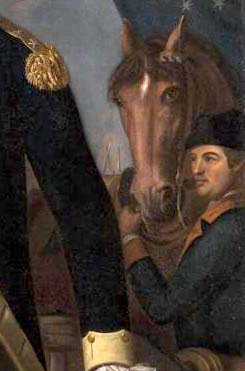
Detail from Charles Willson Peale's 1780 portrait of George Washington after Princeton, Mount Vernon.


In the fall of 1778 a quantity of waistcoats and breeches were issued to the Virginia Continental line.

“...Resolved, That the Governor be requested to order by the first opportunity, as much baize from the public store, as will make waistcoats, to be sent for the Virginia non-commissioned officers and soldiers in the Continental army, and delivered to them gratis, and also such worsted or woolen caps, as may be in the said store, and one thousand blankets.”
H.R. McIlwaine, ed. Official Letters of the Governors of Virginia, Richmond, 1926, Vol. I, November 14, 1778

At least 1,711 of the 2,068 waistcoats appear to have all been constructed of red fabrics other than baize:

784 Red flannel Waistcoats
435 Best Red Cloth Waistcoats
492 Red Serge Waistcoats
(John Moss and Christian Febiger, October 29, 1778, Invoice for Blankets and Clothing, Washington papers)


To George Washington from Colonel Christian Febiger, 4 November 1778 From Colonel Christian Febiger Elizabeth Town [N.J.] the 4th of Novbr 1778.

May it please your Excellency By Order of Generall Woodford I have been in philadelphia and gott made up and procured for the Virga Troops a Quantity of Cloathing Viz. 2194 pair of Breeches, 2068 Vests, 2200 Shirts 1294 Blanketts some Caps, Shoe Buckles etc. etc., which I have brought on with me, Those Goods the Governor of Virginia has order’d either to be sold to the Troops at the Reasonable Rates mention’d in the Invoice or given gratis to such men as have not receiv’d their Quota allow’d by Congress for this Year.1 Major Genl Lord Stirling order’d me to take our proportion out at Pompton where our Brigade now is, an[d] as he had Reasons to think, that the other two Brigades would soon be order’d into Jersey, he directed me to receive your Excellencys Commands, whether their proportions should be sent them immediately or be stored on this Side till they came. I have been inform’d of your Excellencys Orders, that no Cloathing should be issued to the Troops, untill a sufficiency arrivd to Cloath the whole Army.


The 2,194 pairs of breeches were made up in the following colors and farbrics:

“1903 Blue & Green Cloth Breeches…291 Pair Red Serge Breeches”
(John Moss and Christian Febiger, October 29, 1778, Invoice for Blankets and Clothing. The Writings of George Washington from the Original Manuscript Sources, 1745-1799. John C. Fitzpatrick, Editor.)


A manuscript by General William Woodford (dated September 11, 1778) that recently went up for sale at Heritage Auctions enumerates the colors, variety and types of cloth available in this issue. It is likely that the blue breeches contained in the 1903 Blue & Green Cloth breeches" were "light Blue" given the amount of light blue cloth in the inovice.


"Invoice of all the goods brought to Philadelphia from Virginia for the use of the Troops of that State, as per the report of Lieut. Colo. [William] Heth who was sent with instructions from the Brigadiers & Field Officers of the Virginia Line to take charge of them upon their receiving an acct. from Mr. Stark of their arrival this the 21st of August 1778...


Cloth Swatches ca. 1765 from The Exeter Cloth Dispatch Book, 1763-1765

7 1/2 Peices of Scarlet Broad Cloth 175 3/4 yds.
10 ps Buff Do ...287 3/8 yds.
26 ps light Blue do...712 yds.
8 ps Coarse Do...290 yds.
9 ps Mid. Green Do....337 yds.
1 ps Coarse Do...33 yds.
8 ps Coarse Red...300 yds.
12 ps Do Do...397 yds.
4ps fine Black...113 yds.
1500 yds Coarse brown Linen, a large proportion of which is little better than Crocus
664 dozn of Hose...
1300 pair of Shoes
1707 Shirts
3155 pr Shoes
576 Shirts
444 black Stocks
144 ready made short brown vests, without any kind of facings
625 yds coarse blue Shalloon
no kind of Trimmings except a large quantity of very indifferent green Thred
The Goods sent up last winter from Virginia were committed to the care of three Officers who delivered them out pr orders from the Virginia Brigadeers & kept an exact acct. of the articles delivered... "

Saturday, July 30, 2022

Inventory of Stores at Vause's Fort 1757

(1756) George Washington Papers, Series 4, General Correspondence: George Washington, Diagrams of Frontier Forts. [Manuscript/Mixed Material] Retrieved from the Library of Congress, https://www.loc.gov/item/mgw442497/.

In 1756 the privatly owned (and variously spelled) Fort Vass/Vause/Vauxe in modern Shawsville, Virginia, was burned during a French and allied Indian raid by a war party led by Battle of the Monongahela veteran François-Marie Picoté, sieur de Belestre II. Vause's fort was possibly simply a fortified log house or perhaps a two story log "blockhouse" as it was described in the in the Boston and New York newspapers. As part of a defensive "Chain of Forts," Virginia Provincials were assigned to rebuild a "one hundred feet square in the clear" fortification at, or near the site of the original fort on Vause's property.
The location of the second (Hogg's) fort at Vause's has been confirmed, the location of the nearby original (burned) fort has yet to be determined. For information on the archeaology at Fort Vause see "The Second Fort Vause" by Kim McBride (The Archaeology of French and Indian War Frontier Forts. ). Despite being able to pinpoint the outline of the second fort and bastions, McBride writes that "No evidence was found of construction methods of the curtain walls or other structures that connected the bastions...if this construction was entirely above ground, it has likely been obliterated." It is worth noting that the Council of War recommendations for building these forts suggested "Stockades to be 14 feet long" implying walls made of vertical logs placed in the ground. Unless traces of the post molds have been obliterated by plowing, the earthen walls of the second Fort Vause may have been constructed in the same manner as those of Fort Loudon in Winchester, Virginia; described by Andrew Burnaby as "logs filled up with earth."
Colonel George Washington checked on the construction progress in October of 1756. The location was considered very important as "..The fort at Vass's (which Capt. Hogg is now building) is in a much exposed gap; subject to the inroads of the Southern Indians, and in a manner covers the greatest part of Bedford and Halifax." [November 9, 1756. A Plan of the Number of Forts, and strength necessary to each extending entirely across our Frontiers, from South to North.]
Captain Peter Hogg's efforts at fort construction were slow and expensive, additionally payroll irregularities led to him being stripped of his command. Washington wrote to Hogg in July of 1757 that:
I have great complaints made concerning your manner of carrying on the works at the Fort you are building. It has cost infinitely more money than ever was intended for it. and, by the injudicious spot of ground you have chosen to fix it upon, it has caused a general clamour.
Mr Bullet and Mr Fleming inform me, that you refuse to do the necessaries belonging to it.
I therefore desire you will immediately upon receipt of this, deliver up the company, arms, stores and fort, to the command of the former; that the Kings Service may not suffer: You are to take Lt Bullet’s receipt for every thing delivered to him.

Hogg was ordered to compile an inventory of stores to turn over to Lt. Bullet in 1757, a transcription of which is below.

"Inventory of the Stores Belonging to ye Garrison at Vasses
To powder Gross Wt---Lbs 106
To Bullets 264lb
To Firelocks-9
Do Same -9
To Gun Barrils-7
To Militia Muskets-2
To Bayonets not in Repair-8
To Cartridge Boxes of Militia-16
Do of Comp ye[?] Worn out-8
To Deserters Coats-2
Do Vests-1
Do of Britches-1
Do of Hatts [?]-1
Do of Stocks do-1
Do of Blankits[Blankets]-8

To Baggs-14
To Flower Lib Wt 3857
To Beef Dried Lbs Wt 1383
To Hanged Porck Lib. Wt. 72 1/2
To pickling Tubs-13
of Brass Kittles-5
of Iron Do-3
of Horses Belonging to the publick-4
of Broad Hoes-4
of Spades-16
of Shovels-4
of Chissels-21
of Augers-16
of Gouges-5
of Broken Do-1
of Compasses-2
of two feet Rules-1
of Broken Do -2
of adzes-5
of Gimblets-5
of Hewing Axes-12
of Broken Do-1
Of Falling Do - 27
of Country made Do -14
of Whipsaws-4
of Crosscut Do-4
of Hand Do-5
of Claw Hammers-4
of Lathing Do-2
of Whipsaw Files-6
of Cross Cut do-1
of Handsaw Do -4
of Saw Sets-2
of Steal [Steel]-Lib Wt- 13 1/2
of Grind Stones-3
of Cordage in a Running Tackles 30 lb
of Hatchets-1
of Frying Pans -2
of Suits of Serjts Clothes-1
of Militia Swords-9
of Regimental Stockings 47 pairs
of Ladles--Worn-1
of illeg files illeg 2
of Corn in Store by Judg 1/2
of Capt illeg & Received of Do in hande of Lt] 22 Bush 60 Bushels
Note the Above Contains a True Coppy the Inventory of Stores by Capt Hog Deliveded as per my Rects [illeg] Bullitt"
[the origin of the tools listed above are on a seperate document in this packet titled " Accot of Tools Recd for Building the fort on Roanoke"- for example "Tools Sent from Winchester by the Waggon" A few items appear on the second list that are not on the first, for example "Ditto from fo Wm...1 Grindstone 2 iron potts 2 brass Kettles 2 frying pans 2 pewter Tankards Iron Laddle ... 1 Bar of Steel"

[on reverse] Inventory of Stores at Vauses Fort no-date

(1757) George Washington Papers, Series 4, General Correspondence: Peter Hog to Thomas Bullitt, August 4, Inventory of Stores. August 4. [Manuscript/Mixed Material] Retrieved from the Library of Congress, https://www.loc.gov/item/mgw442639/.

------------------------------------------------------------
1757 A Roll o fye Comp. of Late Capt. Hogs with Acct of theire State of Clothes Arms & c. Aug. 4
Name/Clothes of Compy/Arms of Do.
[Clothes of Compy]Coat/Vests/Brcs[Breeches]/hats/Shts[Shirts]/St-illeg[Stockings]/Shoes/[???likely Rowler Rollers/neckstocks]/Hav [haversacks]/Blankits/
[Arms] FireL/Bayo?/Cart B[?]
1. Jn. Johnston - Bayonet Strap wanting
8. Benja. Goss-Gun left by Maj. Lewis's order at Fort Dinwiddie
10. Moses [?] Burns - Gun lost when he deserted
11.David Tate -Blanket purchas'd by Capt Hog
13. Abm. Bledeso- no belt
15. Wm Blanton - no strap
26. Val [?] Mchiche [?illeg? Natl/Jas McBride???] - [Firelock] he brought from the Meddows & looks upon it as his own
29. And.w Fowler - Cartridge box & Bayonet lost on Sand creek

Tuesday, May 24, 2022

The Long Rifle in Virginia Exhibit: Abingdon Virginia

On a recent trip to Martin's Station/Wilderness Road State Park I stopped in to view a new rifle exhibit at the William King Museum of Art in Abingdon, Virginia. Although not surprisingly heavy on "Golden Age" rifles, there are a few early standouts that rifle aficionados will recognize from the RCA series, including the brass barreled rifle and a substantial amount of knives, horns and accessories. The "Virginian ^ A rifleman" image from Richard St. George's 1777 sketches is also on view. As an aside, the William King museum's other galleries were very enjoyable, including some southwest Virginia early decorative arts, and overall it is a great example of a successful adaptive reuse of an early 20th century school building. Well worth the trip to Wolf hills, and the exhibit runs until October, 31 2022.
The Long Rifle in Virginia
The long rifle was a surprise factor in winning American independence. A distinctive product of the backcountry of Pennsylvania and the Southern colonies, this celebrated rifle was essential for survival on the frontier.
“The Long Rifle in Virginia” will showcase more than three dozen curated long rifles and accoutrements from the 18th and 19th centuries that have never before been assembled in the same exhibition. The exhibition will explore the artistry of Virginia gunsmiths through demonstrations, a symposium, and a recreated gunsmith shop on location.
In addition, there is a symposium on October 14th and 15th 2022.

Sunday, October 24, 2021

THE STORY OF THE NEW RIVER: Blueridge PBS documentary

A new documentary that touches on some topics and locations mentioned elsewhere in this blog just premiered on Blue Ridge PBS and may be of interest to some of the readership. "The Story of the New River" is currently streamable (for a limited time) here for free and is also available for purchase from Blue Ridge PBS.

Tuesday, October 19, 2021

An interview with Wayne Trout, Gunsmith.

Although this post is a departure from my usual content and scope, I thought an interview with my good friend and gunsmith Wayne Trout would be of interest to the readers here. Wayne is a talented, humble and helpful man; I always enjoy visits with him at his shop. For inquiries, Wayne can be reached at: wayne.trout@gmail.com
What is your professional background and where are you from?

I was born in Norfolk VA and lived there 57 years. I graduated from VA Tech in 1973 with a BS in biology. I played VHSL sports in high school and NCAA sports in college. After graduation I finally found full time employment in April 1974 in the City Real Estate Assessor's office. I spent my entire professional career, 32 years, in the office. I was appointed to the chief position, City Assessor, in 1989 and held that position for 17 years until my retirement in 2006. In 2008 my wife of 43 years- Margo, and I moved to Giles County Virginia where we currently reside. We have a daughter and son, both of whom are married, and 8 grandchildren.
How did you get started building muzzle loaders?

I joined up with one of the North South Skirmish Association (N-SSA) teams in 1975 and competed in the N-SSA for about 35 years. I had the good fortune of shooting on several national championship teams during that time. It was the N-SSA competition that got me started building guns. A good friend and I were having to rework the internal parts on our reproduction locks at least twice a year. We noted that the guys shooting original guns never had to do lock work. So, we decided to buy original locks and build rifles around them. When I had finished my rifle the chair of the N-SSA small arms committee expressed interest in buying it from me. I told him I had no interest in selling the gun and gave him what I thought was an outrageous price and he said that if I decided to let it go to tell him! Because I enjoyed doing the rifle build I purchased parts and started another one. Before I had finished it someone had said they wanted to buy it when I was done. As a result I estimate that I built around 30 copies of civil war rifles for shooting competition. Around 2008 I bought a flint long rifle kit and built it. While that rifle will never see the light of day, the ability to utilize a degree of artistic license in building a gun really appealed to me, especially since the civil war rifles had to be exact reproductions of the original guns.. So, I thought I would do another. When I had completed the second kit I took it to a show in Harrisonburg VA. I walked into the showroom and almost immediately someone asked me if it was for sale and they bought it! I guess that pretty well sums up how I got to where I am today.

Who have you learned the most from?

Living in Norfolk I had the good fortune of being about 45 minutes away from Colonial Williamsburg. Almost once a week I would drive there and go to the gun shop and aggravate the guys in there. At the time Richard Frazier, Clay Smith and Richard "Sully"Sullivan were the journeyman smiths and George Suiter was the shop master. All four men were of great help and encouragement to me. Even now I maintain regular contact with George Suiter and have annual contact with Clay and Sully. At George's insistence I started taking classes at the NMLRA gunsmithing school at Western Kentucky University. I have had the distinct pleasure and privilege of working under masters like Jack Brooks, Art DeCamp, Jim Kibler, Mark Silver and my good friend George Suiter.. I have also had the good fortune of getting to know Jim Chambers, Mark Thomas and many other people who are at the top of the long rifle art. Lastly, I had the distinct pleasure of being able to spend extended time with my dear old friend Bob Harn. I was able to work in Bob's shop while my wife Margo and I vacated the winter climate of the Virginia mountains for Florida. I have been very fortunate to receive instruction and critique from folks I consider the best at what they do.

Trout's 2019 Contemporary Longrifle Associatioin show display via the Contemporary Makers blog

What is it about building rifles vs. fowlers or muskets that intrigues you?

As I alluded earlier, the art of long rifle building is much different than reproducing an 1861 Springfield rifle, 1855 Harpers Ferry or any other civil war shoulder arm. All I did was make an exact duplicate of the original military weapon. The artistic skills needed to complete a longrifle and the ability to apply some degree of personal interpretation far exceeds and is considerably more rewarding than making an exact copy of a military gun that is no different than any other weapon of its kind. While I greatly enjoy building and decorating long rifles I would say that there really is not any part of the build that is easier from me than others, they're all difficult! I do, however, enjoy the finishing work of carving and engraving, but it takes a long time to get there.
Who is your favorite historic gunsmith or rifle style and why?

Because I am a native Virginian, I gravitate primarily to the work of early Virginia gunsmiths. While I appreciate the arms from throughout the long rifle era, I prefer the early work, say from 1760-1790. The graceful lines of an early Virginia or Lancaster County gun with their clean, crisp lines I find very appealing.
What advice would you give an aspiring gun maker?

If I were to advise an aspiring gunmaker I would say to find someone who has original guns. The ability to handle originals provides a tremendous amount of "tactile memory" that will prove invaluable in moving forward in the art. The study of originals will help to add that third dimension that is often needed when studying flat photos in a book.

What is your most frequently used reference book/resource?

Spending time looking at and studying those "flat" photos in books like Shumway's Rifles of Colonial America Volumes 1 and 2 and Kindig's Thoughts on the Kentucky Rifle in Its Golden Age is of great benefit. Also, don't be afraid to take classes. Learning from those who have mastered the skills of barrel inletting, stock shaping, furniture inletting, making patch boxes and furniture, carving, engraving and any other associated skills will prove much more beneficial than the school of "hard knocks".

Monday, February 1, 2021

"A List of the Negroes at the Lead Mines" The enslaved workforce of Virginia's Revolutionary War lead mine.

Our American liberty was won in part, using leaden bullets mined by men and women who were themselves denied freedom. One of the regrettable ironies of our fight for Independence from Britain is that approximately 33 enslaved men and women labored at Chiswell's lead mines in southwest Virginia (located in modern Austinville Virginia, near Wytheville) during the Revolutionary war. The mines had been a private commercial concern, but by 1776, were rented and administered by the State of Virginia due to their strategic importance. In a letter to William Byrd, who was one of the mine's partners; Edmund Pendleton wrote that "the Committee of Safety wishes to have the Assistance of your two negroe men Big Joe and Little Isaac or if you cannot spare them, two others named Lewis and Sligo" (Pendleton papers v1 p149 EP to WB 2/9/1776).

The labor of these slaves was generally voluntarily "hired" by their masters for a term of eight years; however in one case a runaway named Bristol who had been caught attempting to join "Lord Dunmore's fleet when at Gwynn's island" was sent to the mines as a prisoner. Bristol's lost wages were petitioned for by his former owner, William Mountague of Lancaster County, Virginia in 1779. Bristol again attempted to gain his freedom in 1785 and a runaway ad for him was published in the Virginia Gazette.


Virginia Gazette or American Advertiser (Hayes), Richmond, May 14, 1785.

TWENTY POUNDS REWARD WILL be given, for apprehending and delivering to me, two negro men, CAESAR and BRISTOL, alias BRISTER, or Ten Pounds for each of them. Caesar is about 5 feet 7 inches high, of a square athletic make, and supposed to be near 30 years of age; he had on, a blue regimental coat, faced with white, and I believe, a white cloth waistcoat and breeches. He was purchased by the State, of William Robinson, Esq; of Princess Anne, the agent of John Hancock, and has for some years past been employed at the lead mine. BRISTOL, or BRISTER, is about 5 feet 9 inches high; of a spare make, and about the age of CAESAR. He was formerly the property of Mr. William Mountague of Lancaster, and has been employed for some years at the lead mine. He wore at the time he ran away, an old brown cloth coat, and an old pair of leather breeches. He carried with him, a new blue coat faced with white or red, a new white cloth waistcoat and breeches, and a new blanket.
THOMAS MERIWETHER. Richmond, May 10, 1785.


A conjectural sketch of the issued clothing worn by enslaved mine workers circa 1780. Illustration by Jim Mullins.


The names of the enslaved workforce were recorded in a manuscript now held in the Library of Virginia and are included below in hopes that they will be properly remembered for their contribution to our Nation as an integral part of the forging of our Republic, even while being denied freedom and the fruits of their labor themselves.


A List of the Negroes at the Lead Mines

Will
Bob
Cesar
Ned
David
Fielding
Juba
Bristol
Lewis
Roger
Jacob
Frank
Peter
Tar
Aberdeen
Tom
James
Phebe
Sue

These are able & fit for Labor when well }

Aberdeen
Glasgow
York
George
Lucy
Phillis
Sarah

Old & Super annuated

Charles
Luke [i]
Luke [ii]
James
Kitt
Aaron
George
Sam [i]
Sam [ii]
Jacob
Peter
Dick Run away


Clothing and bedding was issued to the enslaved workers from the Virginia Public Store (excerpts from Colonial Williamsburg MS)

Virginia Public Store Daybook June 1, 1778-Nov. 13, 1778 M-1016.1
Williamsburg 6th Nov. 1778
Lead Mines per Order Governor Dr
To Sundry Clothing for 33 Negroes imployed in that work del Colo. Charles Lunch Viz
To 264 Yds Tartaine
231 do Linen
33 pr Stockings
allowing [illeg] shirts [per] man...

M106.2
Nov.1 1779
Lead Mines Ord Board of Trade
Sundr furnished Negroe Dick belonging to the Mines Vizt.
1 Coat
1 pr Breeches
1 Waistcoat
1 Shirt
3 1/2 Yd Linen 1pr Stockings
1 Cap 1 pr Shoes
1 Baize Blanket

M-1016.2
Daybook Williamsburg Public Store
July 1, 1779-July 12,1780
[Nov. 3 1779]
"...Publick Lead Mines and B. of Trade
Sundr. for Clothing the Negroes at the Mines: Viz.
195 Yds 5/8 Coarse Cloth @ 25/... 243..15-
32 1/2 do. Green baize @ 10/... 16..5-
35 Pair Stockings @ 15/ 26...5-
30 hunting shirts @ 12/6 18..15..-
4 Baize blankets @ 90/ 18..
8 Small dutch do. @ 9L... 72..-...-
23 better do.
2lb Sewing thread
8 doz Pewter butts
30 ditto vest
Pr Christopher Irvine


Richmond 28th November 1780 p138
M-1169.5 Richmond
Public Lead Mines pr Ord Governor
For Sundry Clothing furnished for the use of Thirty Three Negroes belonging to the Public [illeg] works at the Mines-Vizt
10 Sailor's Jackets
45 Yds coarse Cloth for 15 uper Jackets
33 Sailors under Jackets
33 pr Breeches
261 Yds Osnabrigs for 66 Shirts & Linings
for 20 pr Breeches
7 yds Negroe Cloth
40 yds do do
Pr Harry Terrece [?]

Unlike Bristol, who was carried to the mines as a prisoner after attempting to join the British forces with Lord Dunmore at Gwynne's Island; an enslaved man named Aberdeen left his master (a Loyalist named John Goodridge, possibly the infamous privateer John Goodrich ) when Goodridge sought to join the British at Norfolk in 1776. Aberdeen presented himself to one James Hopper and was subsequently sent by Colonel Lynch to the mines where he "labored Honestly" until 1783, at which time he successfully petitioned for his freedom (thanks to both April Danner and Sarah Nucci for bringing Aberdeen's story to light). In addition to Aberdeen, the slaves who had served in the army were then legally emancipated.

CHAP. III. [Chapter CXC in original.] An act directing the emancipation of certain slaves who have served as soldiers in this state, and for the emancipation of the slave Aberdeen.

Chan. Rev. p. 210. I. WHEREAS it hath been represented to the present general assembly, that during the course of the war, many persons in this state had caused their slaves to enlist in certain regiments or corps raised within the same, having tendered such slaves to the officers appointed to recruit forces within the state, as substitutes for free persons, whose lot or duty it was to serve in such regiments or corps, at the same time representing to such recruiting officers that the slaves so enlisted by their direction or concurrence were freemen; and it appearing further to this assembly, that on expiration of the term of enlistment of such slaves that the former owners have attempted again to force them to return to a state of servitude, contrary to the principles of justice, and to their own solemn promise. Preamble reciting that many slaves, during the war, were enlisted into the army, as substitutes, being tendered as free men. II. And whereas it appears just and reasonable that all persons enlisted as afosesaid, who have faithfully served agreeable to the terms of their enlistment, and have thereby of course contributed towards the establishment of American liberty and independence, should enjoy the blessings of freedom as a reward for their toils and labours; Be it therefore enacted, That each and every slave, who by the appointment and direction of his owner, hath enlisted in any regiment or corps raised within this state, either on continental or state establishment, and hath been received as a substitute All slaves so enlisted, by appointment of their masters, and serving their term, emancipated.


Colonel Charles Lynch, who managed the lead mine during the Revolution, became an advocate of manumission in his later years. A 1792 document signed by Lynch read:

“All men who are by nature free and agreeable to the command of our Lord and Savior Christ believe it is our duty to do unto all men as we would have them do unto us.”


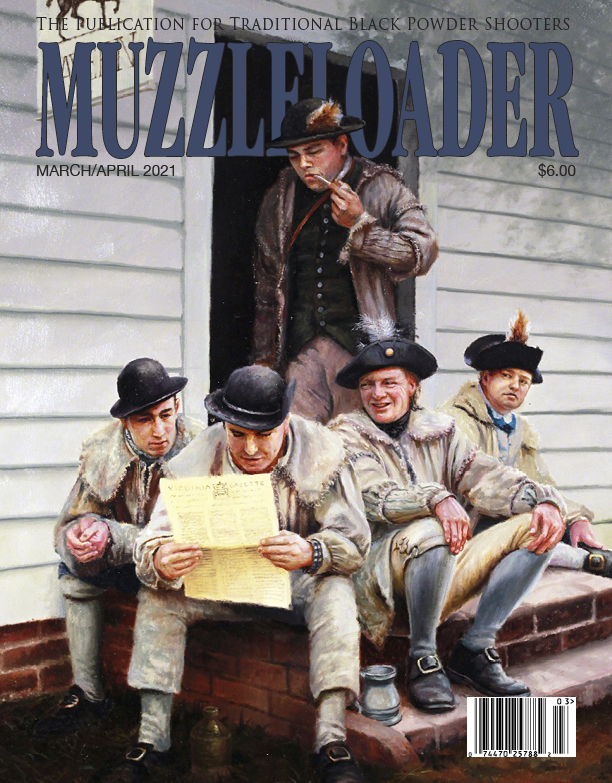
For further information on the lead mines, I encourage you to have a look at my article "Chiswell's Lead Mines" which appears in the March/April 2021 issue of Muzzleloader magazine.

My sincere thanks to April Danner, Sarah Nucci, Michael Gillman, Spenser D. Slough and Joel Anderson for their generosity in sharing primary source information on this often overlooked topic. Additional info can be found here: